In six years, 19 in 100 women over 65 with thin bones had a fracture on a dummy drip, 12 on the drug. In adults not low in vitamin D, extra pills showed no gap.
After menopause, the number your doctor measures is bone density. What you care about is not breaking a bone. Bone drugs have been shown to prevent that in trials. The vitamin D and calcium pills many people take for their bones have not shown it in people living at home.
The clearest test ran in Auckland. Researchers gave 2,000 women over 65 with low bone density either a bone drug, zoledronate (also called zoledronic acid), or a dummy drip of salt water (1). Over six years, 190 of the 1,000 women on the dummy drip had a fragility fracture (1). On the drug, 122 did (1). That is about a third fewer women with a fracture.
Extra vitamin D, which many people take for their bones, did not show that kind of gap. VITAL was a US trial of 25,871 adults who were not chosen for low vitamin D, followed for about five years (4). On vitamin D, 5.9 percent had a fracture; on placebo, 6.0 percent did (4). The two results come from separate trials in different people, and we keep them apart below.
Exercise sits in between. Its fracture evidence comes mostly from fewer falls, and it is less certain (12). If you are 50 to 65, the advice section near the end says which trial comes closest to your age.
Density Is the Test. Fractures Are the Outcome.
A bone density scan, called a DXA scan, measures how much mineral sits in your hip and spine. The result comes as a T score: how your density compares with a healthy young adult's. Minus 2.5 or lower is the usual line for osteoporosis. Between minus 1 and minus 2.5 is called osteopenia. In this article we call that low bone density.
Density is a stand-in. It is quick to measure, and fractures take years to count. So many bone treatments are first judged on whether density goes up. The trouble is that a stand-in can move while the outcome does not.
The textbook warning is fluoride. In a four-year Mayo Clinic trial published in 1990, 202 women with osteoporosis took sodium fluoride or placebo (20). Fluoride raised median spine density by 35 percent compared with placebo (20). Fractures outside the spine went up, not down: 72 on fluoride against 24 on placebo (20).
Those are counts of fractures, not of women. Spine fractures came out at 163 on fluoride against 136 on placebo, no clear difference (20). The authors concluded that fluoride "increases skeletal fragility" (20). We read the abstract only.
That does not make density useless. The SABRE project pooled 22 trials of osteoporosis drugs tested against placebo, with 122,235 people (22). In the trials with a 24-month scan, the size of the hip density gain lined up closely with the size of the drop in spine fractures (22).
The authors say the link "applies across all categories of osteoporosis drugs" (22). They add one limit in their own words: it "cannot be applicable to individual patients" (22). It covers drugs, not exercise or supplements.
There is a second reason a density score is not the whole story. In a US study of 149,524 white women past menopause, 82 percent of those who reported a fracture within a year had T scores better than minus 2.5 (21).
Most fractures happened in women whose scans did not say osteoporosis. That study used scans of the heel, finger or forearm, and fractures were self-reported. Read it as a direction, not a precise share. We read the abstract only.
What a Broken Hip Costs
Fractures are common. In a Swedish city, Malmö, a woman's lifetime risk of a hip, forearm, shoulder or spine fracture from age 45 was 47.3 percent (18). In England and Wales, the lifetime risk of any fracture at all, from age 50, was 53.2 percent for women (19). Rates differ between countries, and the English figure counts every kind of break. Both are abstracts we read.
Hip fractures carry the most weight. A meta-analysis pooled cohort studies that followed people with a hip fracture alongside people of the same age and sex without one (16). In the first three months, women with a hip fracture died at 5.75 times the rate of the women without (16). The range compatible with the data ran from 4.94 to 6.67 (16).
That figure is a hazard ratio: a ratio of how fast events piled up in two groups, not a count of people. 1.0 is the no-difference point. Other ratios in this article, the risk ratio, rate ratio and odds ratio, read the same way: below 1.0 means fewer events in the treated group.
For a sense of scale, the authors modelled white American women who break a hip at 80. They compared them with women of the same age without a fracture. The estimated excess annual mortality was 8 percent one year after the break, and 22 percent at ten years (16). Then they state the limit plainly.
"We do not know whether the long-term excess mortality... is driven by differences in frailty that existed before hip fracture, were precipitated by hip fracture, or both" (16).
A Swedish study of 286 pairs of identical twins, one of whom broke a hip, gets closer to an answer (17). For women, the extra death risk sat in the first year; after it, the twins who broke a hip died at about the same rate as their co-twins (17). In men, the extra risk lasted beyond the first year (17). The study is small, and we read its abstract only.
The Drug Trial That Counted Fractures
The Auckland trial is the best direct test in women with low bone density but not osteoporosis (1). Its lead author is Ian Reid of the University of Auckland. The team recruited women aged 65 and over from the electoral rolls, with hip T scores between minus 1.0 and minus 2.5 (1). Their average age was 71 (1).
Each woman had four infusions, 18 months apart, of either zoledronate or salt water (1). Zoledronate belongs to the bisphosphonates, a family of drugs that slow the cells that break bone down. Women not already taking vitamin D were given it; calcium was not supplied (1).
The trial's primary endpoint, the one result it was built and sized to test, was the time to a first fragility fracture (1). The trial defined that by where the break was, not by how hard the fall was. It counted any break except those of the fingers, toes, the long bones of the hands and feet, the skull, the face and the jaw (1). Spine fractures seen on X-ray counted too (1).
Our article on why rapamycin's first longevity trial is judged on its primary endpoint explains why that choice matters.
The result: 190 women on the dummy drip and 122 on zoledronate had a fragility fracture over six years (1). The hazard ratio was 0.63, with a range of 0.50 to 0.79 (1). The whole range sits below 1.0, so chance alone is an unlikely explanation. The authors put it this way: 15 women would need treatment for six years to prevent one woman's fracture (1).
Some of those were spine fractures found only on X-ray. Counting only the fractures women noticed, the hazard ratio was 0.73, and 20 women would need treatment for six years to prevent one (1).
Two details make the estimate cautious, not generous. More women on the dummy drip started a bisphosphonate outside the trial, 115 against 33, which would narrow the gap (1). And the result held when the researchers removed 163 women whose scans showed osteoporosis somewhere (1). Hip fractures alone were not clearly lower (1).
The drug has a side effect most women notice. A flu-like reaction after the first drip led 56 women on zoledronate to decline the second, against 5 on the dummy drip (1). Six more women on the drug skipped the second drip because of eye inflammation, called iritis; no woman on the dummy drip had it (1).
Two rare harms worry doctors with this family of drugs: damage to the jaw bone and unusual breaks of the thigh bone. The trial saw neither in either group (1). The authors add that it was "underpowered to definitively assess such rare events" (1).
The authors also draw the boundary themselves: "our findings should not be extrapolated to younger women, men, or persons who have normal bone mineral density" (1).
In 2026, the same group split the six years in two, an analysis done after the fact (3). Nonvertebral fractures are those outside the spine. On the dummy drip they ran at 28 per 1,000 women a year in years one to three, and 32 in years four to six (3). On zoledronate they ran at 23 and then 13 (3).
That puts the later rate on the drug at 0.40 times the rate on the dummy drip, range 0.27 to 0.58 (3). In the early years it was 0.83 times, range 0.60 to 1.14 (3). Treat it as a pattern, not a proof. It carries a lesson about trial length: a three-year trial would have caught the smaller early gap and missed most of the later one.
The same Auckland group then asked about younger women (2). In a 10-year trial, 1,054 women aged 50 to 60 had zoledronate at the start and again at five years, zoledronate once, or placebo twice (2). Their T scores ran from 0 to minus 2.5, so the group included women with normal density (2).
The primary endpoint was a new spine fracture seen on X-ray, a vertebra that lost at least a fifth of its height (2). Many such fractures cause no symptoms; in the older-women trial, most were found at the scheduled X-rays (3). With two infusions, 22 women (6.3 percent) had one, against 39 (11.1 percent) on placebo (2). The risk was 0.56 times that on placebo, range 0.34 to 0.92 (2).
Fractures of any kind that count as fragility fractures were also lower with two infusions, 0.72 times the placebo risk, range 0.55 to 0.93 (2). The abstract gives no counts for that result.
One infusion at the start gave a similar spine figure, 23 women (6.6 percent) (2). The abstract prints a P value of 0.08 for that comparison. A P value is the chance of seeing a gap at least this large if there were no real effect; at 0.08 we do not call it a clear result. We read the abstract only; the full paper is paywalled.
Hormone therapy also lowered fractures in the Women's Health Initiative, alongside risks that depend on age and timing. Our article on what menopause measurably does to bone and cholesterol covers that trial, and the fast bone loss around the final period.
Vitamin D and Calcium Pills: No Detectable Drop in Fractures
VITAL tested vitamin D alone, without calcium, for fractures in ordinary US adults (4). It enrolled 25,871 people across the United States, men 50 and over and women 55 and over, 13,085 of them women (4). Their average age was 67 (4). They took 2,000 international units of vitamin D3 a day, or placebo, for a median of 5.3 years (4).
The trial chose people regardless of their vitamin D level or bone density. In its own words, participants "were not recruited on the basis of vitamin D deficiency, low bone mass, or osteoporosis" (4). Their average starting level was 30.7 nanograms per millilitre. The authors write that most "may have already reached the 25-hydroxyvitamin D level needed for bone health" (4).
The primary fracture outcomes were total, nonvertebral and hip fractures (4). Total fractures: 769 of 12,927 people on vitamin D, against 782 of 12,944 on placebo (4). That is 5.9 percent against 6.0 percent. The hazard ratio was 0.98, range 0.89 to 1.08 (4). Hip fractures: 57 people against 56 (4).
For women alone, 504 on vitamin D and 532 on placebo had a fracture, a hazard ratio of 0.94, range 0.83 to 1.06 (4). The trial found no detectable difference. The range is narrow and sits on 1.0, and that is a finding in itself: it rules out a large fracture benefit in people like these.
One detail matters for the headline. The placebo group was not unsupplemented: 42.6 percent of all participants took their own vitamin D, up to 800 units a day, and 20 percent took calcium (4). VITAL tested extra vitamin D on top of ordinary use.
The authors note the limits of the population. Their results "may not be generalizable to adults with osteoporosis or osteomalacia or older institutionalized persons" (4). In a small after-the-fact look at 401 people with very low starting levels, the trial found no detectable difference either, 7 fractures against 8 (4). It was not built to test deficiency.
D-Health, in Australia, tried a different schedule (6). It randomized 21,315 adults aged 60 to 84 to a monthly 60,000-unit dose of vitamin D3, or placebo, for up to five years; 20,326 were analysed (6). Total fractures: 568 people (5.6 percent) against 603 (5.9 percent), a hazard ratio of 0.94, range 0.84 to 1.06 (6).
Fractures were a third-tier outcome of that trial, not the one it was sized for. The ratio appeared to fall as follow-up went on, though the test for a change over time was not significant (6). The authors write that long-term use "might reduce the incidence of total fractures" (6). Hip fractures leaned the other way, 1.11, range 0.86 to 1.45 (6). We read the abstract only.
Calcium pills fare no better in people living at home. A meta-analysis pooled 33 randomized trials with 51,145 adults over 50, with hip fracture as its primary outcome (5). The absolute differences were at most about one percentage point (5). Calcium alone gave a risk ratio of 1.53, range 0.97 to 2.42; vitamin D alone 1.21, range 0.99 to 1.47; both together 1.09, range 0.85 to 1.39 (5).
Every one of those ranges includes 1.0, the no-difference point, so none shows a clear benefit or a clear harm. Calcium alone and vitamin D alone leaned toward more hip fractures, not fewer (5). The results held across dose, sex, fracture history, dietary calcium and starting vitamin D level (5).
Food in a care home is a different question. A cluster trial assigns whole homes, not single people, to each group. Across Australian aged-care homes, 7,195 residents with an average age of 86 got extra milk, yoghurt and cheese, or their usual menu (13). Fragility fractures fell from 5.2 percent to 3.7 percent over about a year, a hazard ratio of 0.67, range 0.48 to 0.93 (13).
That trial was funded by dairy industry bodies, and a dairy company supplied the food (13). Its residents lived in aged care, at an average age of 86, and fewer than half were followed for more than 15 months (13). It does not tell a 55-year-old at home to drink more milk.
If your doctor prescribed vitamin D for a measured deficiency, or alongside a bone drug, that is a separate decision from these trials. The Auckland drug trial itself gave vitamin D to women not already taking it (1). Our guide to sorting supplement science from marketing has the wider picture.

Exercise: A Little Bone, Fewer Falls
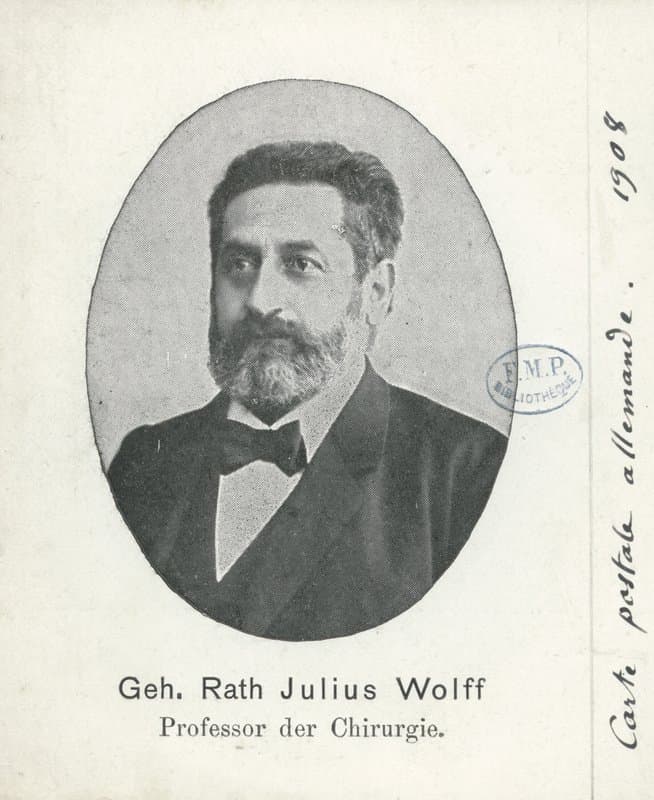
Bone responds to load. That idea carries the name of Julius Wolff, the surgeon pictured above. The modern test of it in women with thin bones is LIFTMOR, in Australia (8).
LIFTMOR took 101 women past menopause, average age 65, with T scores below minus 1.0, so some had osteoporosis (8). For eight months, half did supervised heavy lifting and jumping, twice a week for 30 minutes (8). The other half did a gentle home program (8).
Spine density rose 2.9 percent with heavy training and fell 1.2 percent with the home program (8). At the top of the thigh bone, the femoral neck, it rose 0.3 percent against a fall of 1.9 percent (8). The trial reported one minor back spasm (8). A follow-up scan found no new spine fractures in the training group (9).
LIFTMOR did not count fractures. It shows that heavy, supervised training was tolerated by screened women with low bone density or osteoporosis, and that it moved their density. It cannot show fewer fractures. We read both abstracts only.
The Cochrane review of exercise for bone in women past menopause pooled 43 randomized trials with 4,320 women (11). Compared with women who did not exercise, leg-focused strength training left about 1 percentage point more density at the femoral neck (11). Mixed programs left about 3.2 points more at the spine, mostly by slowing loss (11).
Four of those trials, 539 women, reported fractures: 7 in 100 who exercised had one, against 11 in 100 who did not (11). The odds ratio was 0.61, and the range ran from 0.23 to 1.64 (11). Too few fractures happened to say much either way. The review dates from 2011.
A 2023 meta-analysis looked only at major osteoporotic fractures: hip, spine, forearm and upper arm (10). Across 11 trials, it counted 151 such fractures with exercise and 196 without (10). That was over roughly 9,700 and 9,600 person-years, a person-year being one person followed for one year (10). The risk ratio was 0.75, range 0.59 to 0.94; the abstract prints 0.54 as the lower end (10).
That review mixed randomized and non-randomized trials, and only 6 of its 11 trials had fractures as their primary outcome (10). Its authors ran three of the 11, including the one non-randomized trial (10). It points the same way as the falls evidence.
Falls are where exercise has its strongest record. The Cochrane review of exercise to prevent falls, in people over 60 living at home, rates the drop in falls as high-certainty evidence (12). For fractures from falls, the estimate is lower certainty: 47 people per 1,000 over a year with exercise, against 64 without (12). The risk ratio was 0.73, range 0.56 to 0.95, across 10 trials and 4,047 people (12).
DO-HEALTH, a three-year European trial in adults over 70, tested a simple home strength program three times a week (7). In 1,369 people scanned for spine fractures at four sites, fractures new or worsened numbered 41 among 681 on the program, against 52 among 688 on a stretching control (7). The rate was 0.81 times the control rate, range 0.47 to 1.36, no detectable difference (7).
In women alone the rate was about half the control rate, 0.52, range 0.28 to 0.98 (7). In men it ran the other way, 2.27, range 0.81 to 6.38 (7). That is a split inside a trial not sized for spine fractures, so read it as a lead. The main paper does not give the counts for women alone.
So the case for exercise is real, and it runs mainly through falls. That matters, because a fall is what turns weak bone into a fracture. Our explainers on how exercise touches seven of the twelve hallmarks of aging and on the fitness that predicts lifespan cover the rest of what it does.
Screening: A Trial That Missed Its Primary Endpoint
If a density score misses many future fractures, does checking risk earlier help? SCOOP tested it in England (14). It randomized 12,483 women aged 70 to 85 from 100 general practices to screening or usual care (14).
Screening meant FRAX, a questionnaire-based calculator of fracture risk, then a bone scan for women at higher risk, with the results sent to their doctor (14). The primary endpoint was any osteoporosis-related fracture over five years (14). It was not met: 12.9 percent of screened women had one, against 13.6 percent, a hazard ratio of 0.94, range 0.85 to 1.03 (14).
Hip fractures, a secondary outcome named in advance, did fall: 164 women (2.6 percent) against 218 (3.5 percent), a hazard ratio of 0.72, range 0.59 to 0.89 (14). The authors estimate that 111 women need screening to prevent one hip fracture (14). They also wrote that conclusions from secondary outcomes "need to be treated with a degree of caution and should not be overemphasised" (14).
By year one, 15 percent of screened women were on an osteoporosis drug, against 4 percent with usual care (14). About a third of eligible women took part (14). Over five years, 9 percent of the women died, against the 19 percent expected for their ages (14). The authors call that evidence of healthy selection: the women who joined were healthier than average (14).
A meta-analysis of SCOOP and two similar trials, about 42,000 women in all, found the same shape (15). Hip fractures were lower with screening, a hazard ratio of 0.80, range 0.71 to 0.91, or one prevented per 272 women screened (15). Major osteoporotic fractures were also lower, 0.91, range 0.84 to 0.98 (15). All fractures together were not clearly lower, 0.95, range 0.89 to 1.02 (15).
A missed primary result next to a hopeful secondary one is a pattern we also found in the trials of NMN, urolithin A and other longevity supplements. A pooled analysis points the same way, but it includes SCOOP itself; without SCOOP the hip result was 0.85, range 0.73 to 1.00, right at the no-difference line (15). That is why we give it moderate weight, not more.
The Scorecard
Each row reads without, then with.
| What | Fracture result in randomized trials | How sure |
|---|---|---|
| Zoledronate, women over 65 with low bone density | 19 in 100 to 12 in 100 over six years; primary endpoint (1) | Strong, but one trial in one city |
| Zoledronate, women 50 to 60 | Spine fractures on X-ray, 11.1 to 6.3 percent over 10 years (2) | Moderate; abstract read |
| Extra vitamin D, adults not chosen for deficiency | 6.0 to 5.9 percent; no detectable difference (4, 6) | Strong, for this group |
| Calcium or calcium with vitamin D, adults at home | No lower hip fracture risk across 33 trials (5) | Clear, for this group |
| Dairy food, care home residents around 86 | 5.2 to 3.7 percent over about a year (13) | One trial, industry funded |
| Exercise programs, adults over 60 | Fall fractures 64 to 47 per 1,000 over a year (12) | Low certainty |
| Heavy supervised lifting, women with low bone density or osteoporosis | No fracture outcome; spine density up 2.9 percent (8) | Density only |
| Screening older women | Primary missed; hip fractures 3.5 to 2.6 percent (14) | Moderate, hip only |
| Sodium fluoride | Spine density up 35 percent; more fractures outside the spine (20) | The warning case |
What You Can Do Now
None of this is a reason to change a medicine on your own. It is a set of questions to take to your doctor.
Ask for a fracture risk estimate, not only a density score. The screening trial used FRAX, which works from a questionnaire and can add a scan result (14). Most fractures in the large US study happened above the osteoporosis line (21), which is why one number is not enough.
If you are a woman over 65 and your scan says osteopenia, ask whether a drug with fracture evidence fits you. The Auckland trial tested exactly that group (1). Ask too about the flu-like reaction after the first drip, which made about 1 in 18 women on the drug decline the second (1). The trial left out women with poor kidney function, so ask about that too (3).
If you are 50 to 60, the Auckland team's second trial enrolled your age group, and it found fewer spine fractures seen on X-ray with the drug (2). Women aged 61 to 64 were in neither Auckland trial. It is one trial, read from its abstract, so it is a question to raise, not a plan.
Perhaps you take vitamin D only to protect your bones, and your levels are normal. The two largest trials of vitamin D on its own give no fracture reason to keep going (4, 6). Deficiency, and vitamin D prescribed with a bone drug, are separate questions. Ask before you stop.
For calcium, pills showed no detectable drop in hip fractures in people living at home, across 33 trials (5). The one food trial with a fracture result was in frail care home residents (13). Ask your doctor whether your diet already covers what you need.
Train for strength and balance. Exercise lowers falls with high certainty, and fall fractures with lower certainty (12). Heavy training like LIFTMOR's was tolerated by screened women under supervision, but it did not count fractures (8). If you have low bone density or a past spine fracture, ask your doctor first and train with a qualified instructor.
Losing weight on a GLP-1 drug? Read our article on how much GLP-1 weight loss is muscle and bone, and raise it with whoever prescribes it.
And if you are near menopause, our menopause article gives the numbers on bone loss around the final period, and why women's health needs its own evidence gives the background.
Frequently Asked Questions
Can you rebuild bone density after menopause?
Partly. In LIFTMOR, eight months of supervised heavy lifting raised spine density 2.9 percent in women with low bone density or osteoporosis, while a gentle program lost 1.2 percent. The Cochrane review found exercise left about 1 to 3 percentage points more density than no exercise, mostly by slowing loss. Bone drugs raise density more, and many have fracture evidence from placebo-controlled trials.
Does lifting weights prevent fractures?
Not shown directly. LIFTMOR did not count fractures. The fracture evidence for exercise comes mostly from fewer falls. In adults over 60, there were 47 fall fractures per 1,000 people over a year with exercise, against 64 without, at low certainty.
Does vitamin D prevent fractures?
Not in people who are not low in it. In VITAL, 25,871 US adults on extra daily vitamin D had fractures at 5.9 percent, against 6.0 percent on placebo. D-Health in Australia, with a monthly dose, found no detectable difference either. People with deficiency or osteoporosis were not the question.
Should I take calcium for my bones?
In adults living at home, a pooled analysis of 33 trials and 51,145 people found no lower hip fracture risk with calcium pills, vitamin D, or both. Ask your doctor whether your diet already covers it.
How dangerous is a hip fracture?
In the first three months, women with a hip fracture died at 5.75 times the rate of women the same age without one. For women who break a hip at 80, the authors modelled an excess annual mortality of 8 percent one year after the break. In identical twins, women's extra risk was concentrated in the first year.
Is a bone density scan worth it?
It helps, with limits. In SCOOP, screening 12,483 women aged 70 to 85 did not lower fractures overall. Hip fractures fell from 3.5 to 2.6 percent, about one prevented per 111 women screened. Most fractures happen above the osteoporosis line, so the scan is one input, not the verdict.
My scan says osteopenia, not osteoporosis. Does that matter?
It can. Most fractures happen in women above the osteoporosis line. In the Auckland trial of women over 65 with osteopenia, a bone drug cut fragility fractures from 19 in 100 women to 12 in 100 over six years.
What are the side effects of a zoledronate drip?
In the Auckland trial, the common one was a flu-like reaction after the first drip. It led 56 women on the drug to decline the second infusion, against 5 on the dummy drip. Six more skipped it because of eye inflammation. The trial saw no jaw bone damage or unusual thigh fractures, but it was too small to rule them out.
Sources
- Reid IR, et al. Fracture Prevention with Zoledronate in Older Women with Osteopenia. New England Journal of Medicine. 2018. PMID: 30575489. DOI: 10.1056/NEJMoa1808082. Full text read.
- Bolland MJ, et al. Fracture Prevention with Infrequent Zoledronate in Women 50 to 60 Years of Age. New England Journal of Medicine. 2025. PMID: 39813642. DOI: 10.1056/NEJMoa2407031. Paywalled; abstract read.
- Reid IR, et al. Decreased nonvertebral fracture incidence with zoledronate use for >3 years: post hoc analysis of a Randomized Controlled Trial. Journal of Bone and Mineral Research. 2026. PMID: 41568765. DOI: 10.1093/jbmr/zjag012. Open access.
- LeBoff MS, et al. Supplemental Vitamin D and Incident Fractures in Midlife and Older Adults. New England Journal of Medicine. 2022. PMID: 35939577. DOI: 10.1056/NEJMoa2202106. Author manuscript read (PMC9716639).
- Zhao JG, et al. Association Between Calcium or Vitamin D Supplementation and Fracture Incidence in Community-Dwelling Older Adults: A Systematic Review and Meta-analysis. JAMA. 2017. PMID: 29279934. DOI: 10.1001/jama.2017.19344. Full text read (PMC5820727).
- Waterhouse M, et al. The effect of monthly vitamin D supplementation on fractures: a tertiary outcome from the population-based, double-blind, randomised, placebo-controlled D-Health trial. Lancet Diabetes and Endocrinology. 2023. PMID: 37011645. DOI: 10.1016/S2213-8587(23)00063-3. Paywalled; abstract read.
- Kistler-Fischbacher M, et al. Effects of vitamin D3, omega-3s, and a simple home exercise program on incident vertebral fractures: the DO-HEALTH randomized controlled trial. Journal of Bone and Mineral Research. 2025. PMID: 40492704. DOI: 10.1093/jbmr/zjaf058. Open access.
- Watson SL, et al. High-Intensity Resistance and Impact Training Improves Bone Mineral Density and Physical Function in Postmenopausal Women With Osteopenia and Osteoporosis: The LIFTMOR Randomized Controlled Trial. Journal of Bone and Mineral Research. 2018. PMID: 28975661. DOI: 10.1002/jbmr.3284. Paywalled; abstract read.
- Watson SL, et al. High-intensity exercise did not cause vertebral fractures and improves thoracic kyphosis in postmenopausal women with low to very low bone mass: the LIFTMOR trial. Osteoporosis International. 2019. PMID: 30612163. DOI: 10.1007/s00198-018-04829-z. Paywalled; abstract read.
- Hoffmann I, et al. Exercise and the prevention of major osteoporotic fractures in adults: a systematic review and meta-analysis with special emphasis on intensity progression and study duration. Osteoporosis International. 2023. PMID: 36355068. DOI: 10.1007/s00198-022-06592-8. Open access.
- Howe TE, et al. Exercise for preventing and treating osteoporosis in postmenopausal women. Cochrane Database of Systematic Reviews. 2011. PMID: 21735380. DOI: 10.1002/14651858.CD000333.pub2. Full text read (PMC12744941).
- Sherrington C, et al. Exercise for preventing falls in older people living in the community. Cochrane Database of Systematic Reviews. 2019. PMID: 30703272. DOI: 10.1002/14651858.CD012424.pub2. Full text read.
- Iuliano S, et al. Effect of dietary sources of calcium and protein on hip fractures and falls in older adults in residential care: cluster randomised controlled trial. The BMJ. 2021. PMID: 34670754. DOI: 10.1136/bmj.n2364. Open access.
- Shepstone L, et al. Screening in the community to reduce fractures in older women (SCOOP): a randomised controlled trial. The Lancet. 2018. PMID: 29254858. DOI: 10.1016/S0140-6736(17)32640-5. Full text read.
- Merlijn T, et al. Fracture prevention by screening for high fracture risk: a systematic review and meta-analysis. Osteoporosis International. 2020. PMID: 31838551. DOI: 10.1007/s00198-019-05226-w. Open access.
- Haentjens P, et al. Meta-analysis: excess mortality after hip fracture among older women and men. Annals of Internal Medicine. 2010. PMID: 20231569. DOI: 10.7326/0003-4819-152-6-201003160-00008. Author manuscript read (PMC3010729).
- Michaëlsson K, et al. Impact of hip fracture on mortality: a cohort study in hip fracture discordant identical twins. Journal of Bone and Mineral Research. 2014. PMID: 23821464. DOI: 10.1002/jbmr.2029. Paywalled; abstract read.
- Kanis JA, et al. Long-term risk of osteoporotic fracture in Malmö. Osteoporosis International. 2000. PMID: 11095169. DOI: 10.1007/s001980070064. Paywalled; abstract read.
- van Staa TP, et al. Epidemiology of fractures in England and Wales. Bone. 2001. PMID: 11728921. DOI: 10.1016/S8756-3282(01)00614-7. Paywalled; abstract read.
- Riggs BL, et al. Effect of fluoride treatment on the fracture rate in postmenopausal women with osteoporosis. New England Journal of Medicine. 1990. PMID: 2407957. DOI: 10.1056/NEJM199003223221203. Abstract read.
- Siris ES, et al. Bone mineral density thresholds for pharmacological intervention to prevent fractures. Archives of Internal Medicine. 2004. PMID: 15159268. DOI: 10.1001/archinte.164.10.1108. Abstract read.
- Vilaca T, et al. The relationship between treatment-related changes in total hip BMD measured after 12, 18, and 24 mo and fracture risk reduction in osteoporosis clinical trials: the FNIH-ASBMR-SABRE project. Journal of Bone and Mineral Research. 2024. PMID: 39127916. DOI: 10.1093/jbmr/zjae126. Open access.
Funding Transparency
LSD is editorially independent. We receive no funding from pharmaceutical, supplement or longevity companies. These are the funding ties behind each source above, taken from each paper's own funding and conflict statements where we could read them.
- Source 1 (Reid, 2018): Funded by the Health Research Council of New Zealand. Novartis, which makes zoledronate, supplied the trial drug; the paper says neither had any other role. The lead author reports grant support, lecture fees and consulting fees from Amgen and Merck, consulting fees from Novartis, and lecture and consulting fees from Eli Lilly.
- Source 2 (Bolland, 2025): Supported by three project grants from the Health Research Council of New Zealand; the lead author holds an HRC fellowship. Paywalled: we could not read the authors' disclosure forms or confirm who supplied the drug.
- Source 3 (Reid, 2026): Funded by the Health Research Council of New Zealand; Novartis supplied the trial drug. The lead author reports speaking fees from Amgen, Abbott and Medison Pharma; the other authors declare none.
- Source 4 (VITAL, 2022): Funded by the US National Institute of Arthritis and Musculoskeletal and Skin Diseases, with the parent trial funded by other US National Institutes of Health institutes. The paper names the omega-3 product used in the parent trial, Omacor (Pronova BioPharma and BASF). Per-author disclosures are on NEJM forms we did not open.
- Source 5 (Zhao, 2017): Funded by a Tianjin Science and Technology Research Project grant. The authors reported no conflicts.
- Source 6 (D-Health, 2023): Funded by Australia's National Health and Medical Research Council. One author reports grants and speaker fees from Amgen and grants from Sanofi and Alexion. Other authors list funding or fees from AstraZeneca, Viatris and Pierre Fabre; the first two are stated as for unrelated studies. Paywalled: we read the abstract record only.
- Source 7 (DO-HEALTH, 2025): Funded by the European Union's FP7 program, the University of Zurich, DSM Nutritional Products, Roche Diagnostics, NESTEC, Pfizer Consumer Healthcare and Streuli Pharma, and this analysis by a Vontobel Foundation grant; the funders had no role. One author directs the company that maintains the FRAX fracture calculator; the principal investigator and another author report fees or grants from several drug and nutrition companies.
- Sources 8 and 9 (LIFTMOR, 2018 and 2019): Paywalled. We read the abstracts only and could not check the funding or conflict statements. Two authors list The Bone Clinic in Brisbane as an affiliation; we could not check whether either has a financial interest in delivering this kind of training.
- Source 10 (Hoffmann, 2023): The paper declares no external funding; the guideline project behind it was supported by the Elsbeth Bonhoff Foundation. The authors declare no conflicts. Its authors ran three of the 11 included trials.
- Source 11 (Howe, 2011): Supported by the University of Ottawa, the Ottawa Hospital, Glasgow Caledonian University, the Chartered Society of Physiotherapy and the UK National Institute for Health Research. Declarations of interest: none known.
- Source 12 (Sherrington, 2019): Supported by the UK National Institute for Health Research and by Australian National Health and Medical Research Council fellowships. Three authors wrote trials included in the review, and a fourth wrote a trial it considered; the review says no author selected or processed their own trials.
- Source 13 (Iuliano, 2021): Funded by Dairy Australia, the California Dairy Research Foundation, the National Dairy Council, the Danish Dairy Research Foundation, Fonterra, the Dutch Dairy Association, the Dairy Council of California, Dairy Farmers of Canada and CNIEL, with university and hospital foundations. Fonterra supplied the dairy food in kind; the paper says the funders played no role. Three authors report fees or research support from Abbott, Amgen, MSD, Novartis, Eli Lilly and Allergan, and one is a consultant and shareholder of StraxCorp.
- Source 14 (SCOOP, 2018): Funded by Arthritis Research UK and the Medical Research Council. Four authors report fees, honoraria, grants or advisory roles with many companies that make bone drugs or scanners, including Amgen, Eli Lilly, Merck, Novartis, Servier and UCB. One author, John Kanis, is the architect of FRAX and states no financial interest in it.
- Source 15 (Merlijn, 2020): No support for this work. Four authors ran one of the three pooled trials, and report financial relationships with two Dutch health insurers and a Dutch laboratory foundation during it.
- Source 16 (Haentjens, 2010): Funded by the Fund for Scientific Research Flanders, Leuven University, US National Institutes of Health grants, a Paul B. Beeson award and the Willy Gepts Foundation. We did not open the journal's disclosure page.
- Sources 17 to 21 (Michaëlsson, 2014; Kanis, 2000; van Staa, 2001; Riggs, 1990; Siris, 2004): Paywalled or old. We read the abstracts only and could not check their funding or conflict statements.
- Source 22 (SABRE, 2024): Funded by a US Food and Drug Administration grant and a grant from the American Society for Bone and Mineral Research. Five authors report consulting, speaking or advisory ties, including Pharmacosmos, Amgen, UCB, Takeda, Sandoz, Kyowa Kirin, Alexion and Eli Lilly.
Related Reading
- Menopause Moves Bone and Lipids. No Clock Study Exists., how fast bone thins around the final period, and the hormone therapy trial
- Rapamycin's First Longevity Trial Missed Its Primary Endpoint, why the result a trial was built to test matters most
- GLP-1 Weight Loss Is Up to 40 Percent Muscle and Bone, what the weight-loss drugs take with them
- Women Report Adverse Drug Effects at Twice the Rate of Men, why women's health needs its own evidence
In Auckland, a bone drug cut the share of women over 65 with a fracture from 19 in 100 to 12 in 100 over six years. In 25,871 US adults not chosen for low vitamin D, extra daily vitamin D left fractures level. Density is the test; fewer fractures is the goal.
Written with the help of AI tools, shaped and verified by humans. Every result in this article was checked against the study's own paper or abstract; paywalled sources are marked, and only their abstracts were read.
This article is for information only and is not medical advice. Do not start or stop any medicine on the basis of an article.