All 703 had hearing loss and early memory problems. Two years on, about 3 in 100 with hearing aids scored at dementia level, against 5 in 100. Too few to tell.
A trial in Shanghai gave free hearing aids to half of 703 older adults with hearing loss and mild cognitive impairment (1). That term means memory or thinking has slipped more than age explains, while daily life still works (1, 9). The other half got classes on hearing care (1).
The trial, called CHOICE, was built to answer one question. After two years, would fewer people with hearing aids have got worse, to a dementia-level score?
The answer was not clear either way (1). About 3 in 100 people with hearing aids reached that score, against about 5 in 100 without (1). A gap that size could be chance. Far fewer people got worse than the planners expected, so the trial was too small to settle the question (1).
A second result was much bigger. About 15 in 100 people with hearing aids went back to a normal score, against about 2 in 100 without (1). The trial's plan called that result exploratory: reported, but not what the trial was set up to test (1). The authors say it "warrants cautious interpretation" (1).
ACHIEVE, a large trial in the United States, also missed its main goal (4). The belief that hearing aids prevent dementia still rests mostly on studies that watched what people chose (5, 6, 7). Trials that decide by chance who gets hearing aids have not confirmed it (1, 4).
Hearing aids did improve hearing. With them in, people could hear quieter sounds, and no harm from the devices was reported (1).
The Trial Asked One Question
Some people with mild cognitive impairment go on to dementia. Some stay level, and some return to normal (9).
Why would a hearing aid help? The 2024 Lancet Commission lists ideas for how hearing loss might raise dementia risk. Hearing loss may bring loneliness and isolation. It may also leave the brain with less to work on, and more effort spent on listening (8). Our article on social connection has the numbers on isolation.
CHOICE stands for Chinese Hearing Solution for Improvement of Cognition in Elders (1). Its senior author is Hao Wu of Shanghai Ninth People's Hospital (1). It ran at three hospital ear clinics and three community health stations in the city (1). Researchers checked 21,908 adults aged 60 or older and enrolled 703 of them between September 2021 and February 2024 (1).
Everyone had moderate to severe hearing loss and had not used a hearing aid in the past year (1). Their average age was about 75, about two thirds were men, and more than 9 in 10 lived with family (1).
Half, 353 people, got a pair of behind-the-ear hearing aids at no cost, fitted by audiologists and adjusted at each visit (1). The other 350 got about 45 minutes of teaching per visit on hearing care, chronic disease and healthy habits (1). They were promised free hearing aids at the end of the study if they asked (1). Five of them got hearing aids on their own during the trial (1).
A score, not a diagnosis
The trial measured thinking with the Clinical Dementia Rating. It is a structured interview of 30 to 45 minutes, scored in steps (1). A score of 0 is unimpaired (1). A score of 0.5 is labelled questionable: something has slipped, short of dementia (1). A score of 1 is mild dementia-level impairment, and 2 and 3 are worse (1).
Everyone started at 0.5 (1). The trial used that score as its working definition of mild cognitive impairment. The authors note that a score of 0.5 is not the same as a clinical diagnosis of the condition (1).
The primary endpoint is the one result a trial is built and sized to test. Here it was the share of people whose score rose from 0.5 to 1 or more within two years (1). So "dementia" in this trial means a dementia-level score on that interview. No doctor's diagnosis was required.
Trials file their main goal in a public register before they start. CHOICE registered in August 2020. The record, as it stood in November 2023, gives the goal as "Rate of dementia progression" (3). The rule that people had to score exactly 0.5 to enter was not in the protocol or the registration, which the authors list as a limitation (1). It kept out 62 people: 55 who scored 0 and 7 who scored 1 (1).
The Main Result: About 3 in 100 Against 5 in 100
After two years, 3.09 percent of the hearing-aid group had reached a dementia-level score, against 4.74 percent of the education group (1). That is about 3 in 100 people against about 5 in 100.
The relative risk was 0.59 (1). A relative risk compares the share of each group that reached the score. Here it means that for every 10 people who reached it in the education group, about 6 did in the hearing-aid group. The paper's ratio is adjusted for where people were recruited, so it differs a little from plain division (1).
The range of values compatible with this data ran from 0.25 to 1.38 (1). 1.0 is the no-difference point. So the result fits hearing aids cutting the rate by three quarters. It also fits them raising it by more than a third.
The P value was 0.23 (1). That is the chance of seeing a gap at least this large if there were genuinely no difference between the groups: about 1 time in 4.
In plain terms, the trial found no detectable difference. It could not rule out a large benefit, and it could not rule out a worse outcome either.
Too few people got worse
The trial's size was based on an expectation. Planners assumed 18 in 100 people with mild cognitive impairment would progress to dementia each year without hearing aids, and 10 in 100 with them (1, 2). The 10 came from a small earlier study in which 3 of 30 hearing aid users progressed within a year (2).
In the trial, under 5 in 100 people in the education group reached a dementia-level score in two years (1).
The authors say the 18 percent figure comes from specialist memory clinics (1). Their own participants came from ear clinics and community health stations, with daily function relatively well preserved (1). With so few people reaching the score, they write, the main analysis was "underpowered" (1).
Underpowered means a trial saw too few cases to tell a real effect from chance. By our reading, a trial planned around the rate that showed up would have to be much larger or run much longer.
The percentages are estimates
The trial's percentages are estimates. In all, 93 people missed the final visit: 33 in the hearing-aid group and 60 in the education group (1). Four of them, 2 in each group, already had a dementia diagnosis, and it was carried forward (1). The analysis filled in the other 89 results with a standard statistical method, 31 in one group and 58 in the other (1).
The reported gap is adjusted too. The paper gives it as 2.07 in 100, where plain subtraction gives 1.65 (1).
The paper does give counted figures for people who had a final result and followed the plan. Among them, 6 of 317 with hearing aids reached a dementia-level score, against 9 of 285 without (1). That is about 2 in 100 against about 3 in 100, a little lower than the main estimates. It is 15 people in all in that analysis, too few to settle a question about dementia.
15 in 100 Returned to a Normal Score, Against 2 in 100
The second result is the one most likely to be quoted. In the hearing-aid group, 15.34 percent went from a score of 0.5 back to 0, against 2.36 percent in the education group (1). The relative risk was 5.94, with a range from 2.46 to 14.37 (1).
That is about six times as often. The paper's adjusted difference is 12 more out of 100 people (1). The P value was less than 0.001 (1).
Among people who had a final result and followed the plan, the counts were 49 of 317 against 4 of 285 (1).
Chance is unlikely to explain a gap that wide. How the score was taken might. The paper lists most of the reasons itself.
The trial was not set up to test it. The plan treated secondary outcomes as exploratory (1). The paper's summary says hearing aids "increased the rate of cognitive improvement" (1). The first paragraph of its discussion is more careful: the authors write that this finding needs "further investigation" (1).
Participants and staff knew who had hearing aids. Participants, audiologists and study coordinators all knew (1). The paper says the people who scored the interviews were not told, and that hearing aids were taken out before each assessment (1). The statistician was not told either, and psychiatrists reviewed recordings of the interviews (1).
The protocol had said only the data analysts would be blinded (2). The paper adds the interview scorers (1).
The score comes from an interview. The authors list reliance on one subjective scale, used for both entry and outcome, as a possible source of bias (1). Family members were encouraged to attend (1). The authors add that free hearing aids may have biased what participants said (1).
Hearing better may help in the interview itself. The team took steps against this: hearing aids out, quiet rooms, written instructions (1). Even so, they say they cannot fully exclude an effect of better hearing on the scores (1).
More people left the education group. There, 60 people missed the final visit, against 33 in the hearing-aid group (1). The authors report that their checks on the missing results supported the method they used, and that three other ways of handling them gave similar answers (1).
Only one area moved. Of the six areas the interview covers, only memory showed a detectable gap (1).
Other test results are still to come. The trial also collected a standard thinking test, measures of daily function and a quality of life score. Those "will be reported separately" (1).
Mild cognitive impairment also often lifts without treatment. A 2025 review pooled 89 studies with an average follow-up of 5.2 years (9). In the 14 clinic studies that reported it, about 9 percent of people returned to normal. In the 10 population studies, about 28 percent did (9).
Those studies used other definitions and longer spans, so the numbers do not line up neatly with CHOICE. Set beside them, one CHOICE figure stands out. About 2 in 100 is lower than either figure. About 15 in 100 falls between them. That reading is ours; the authors do not make it.
The First Large Trial Ended the Same Way
ACHIEVE was published in The Lancet in 2023, with Frank Lin of Johns Hopkins as its first author (4). It enrolled 977 adults aged 70 to 84 with untreated hearing loss at four sites in the United States (4). None had substantial cognitive impairment (4). Half got hearing aids and audiology support, and half got health education, for three years (4).
Its primary endpoint was the change in a combined score from a set of thinking tests, measured in standard deviation units (4). Scores fell by about 0.2 units in both groups over three years (4). The gap between the groups was 0.002 units, with a range from minus 0.077 to 0.081 and a P value of 0.96 (4). For a difference, 0 is the no-difference point.
By our arithmetic, that range leaves room for the fall being about two fifths slower with hearing aids, or about two fifths faster.
A planned analysis then split people by how they were recruited (4). In 238 people drawn from a long-running heart study, who were older and at higher risk, decline was 48 percent slower with hearing aids (4). In that group, scores fell 0.402 units without hearing aids, and the gap between groups was 0.191 units (4). In 739 healthier volunteers there was no detectable difference (4).
That 48 percent describes change in test scores in one part of the trial. It is not a dementia figure. ACHIEVE's own measure of new cognitive impairment, which included dementia, showed no detectable difference, overall or in either part (4). Our article on neuroplasticity and brain aging reports both halves of that result.
We have leaned on that number ourselves. An earlier article of ours on brain health carries it in its headline and calls the trial clinical proof. The figure applies to the higher-risk group only, and it measures test scores.
Both trials ended the same way: a main result with no detectable difference, and a hopeful result somewhere the trial was not built to test. The Galleri cancer blood test trial ended that way too. So did rapamycin's first longevity trial.
Why So Many People Expected a Yes
The expectation came from observational studies, which watch what people choose to do.
A 2023 analysis pooled 8 such studies with 126,903 people, followed for 2 to 25 years (5). Hearing aid users had a hazard ratio of 0.81 for cognitive decline, compared with people whose hearing loss went uncorrected (5).
A hazard ratio is a ratio of how fast events piled up in the two groups, not a count of people. Here the hazard was 19 percent lower among users (5). The summary we could read gives no absolute figures (5).
A 2021 study looked at people who already had mild cognitive impairment. It followed 939 of them at US Alzheimer's research centres (6). Hearing aid use was associated with a hazard ratio of 0.73 for dementia, with a range from 0.61 to 0.89 (6). Half of the non-users had progressed to dementia by 2 years, and half of the users by 4 years (6).
In that study, 497 of the 939 people progressed (6). That is a far higher rate than in CHOICE.
A 2026 Australian analysis covered 2,777 older adults (7). It put the 7-year risk of dementia at 5.0 percent for those prescribed hearing aids and 7.5 percent for those not (7). The relative risk was 0.67, with a range from 0.37 to 0.97 (7). Scores on thinking tests were similar in the two groups (7).
Studies like these share a weak point. People who get and wear hearing aids differ from those who do not, in education, income and health habits (4). Those differences can protect thinking without any help from the device.
This is called confounding. The Australian authors wrote: "We cannot rule out residual confounding" (7). Only a trial that decides by chance who gets hearing aids removes it.
On the earlier of these studies and on ACHIEVE's higher-risk group, the 2024 Lancet Commission said the case "is now stronger" that treating hearing loss lowers dementia risk (8). It called for hearing aids to be accessible (8). It wrote before CHOICE reported.
CHOICE does not overturn these estimates. Its range, 0.25 to 1.38, has room for effects of that size (1). It could not confirm them either.

How One Seller Describes It
Some sellers now promise more than better hearing. Here is one example, read on 12 November 2026. A page on the website of Beltone, a company that sells hearing aids, is headed "Study Suggests Hearing Aids May Cut Your Risk of Developing Dementia in Half" (11). The study it describes is ACHIEVE.
The page does say that in the total group hearing aids did not appear to reduce cognitive decline (11). But ACHIEVE's effect of about half was in test scores, in the higher-risk group (4). On new cognitive impairment, which included dementia, the trial showed no detectable difference (4).
The page says the study looked at more than 3,000 people (11). ACHIEVE screened 3,004 people and randomized 977 (4).
It also advises that, even with mild hearing loss, a hearing aid is a "practically risk-free method to preserve your cognition" (11). Neither trial's main result shows that a hearing aid preserves thinking (1, 4).
What Hearing Aids Did Do
In CHOICE, the quietest sounds people could hear, averaged across pitches, went from 52.65 to 32.18 decibels with the hearing aids in (1). Lower is better. Two other hearing scores, for recognising words and for hearing in daily life, stayed level in both groups (1).
People wore the hearing aids for 5.9 hours a day on average (1). The protocol had asked for more than 10 (2). ACHIEVE participants reported 7.2 hours at year three (4). The CHOICE authors suggest that memory problems may make daily wear harder (1).
No harm from the hearing aids was reported in CHOICE (1). There were 20 serious medical events, 10 in each group, and none was related to the study (1). ACHIEVE reported no unexpected harm judged to be related to the study (4).
In ACHIEVE, people rated their own trouble communicating. With hearing aids the score fell from 15.7 to 7.8, a level the authors read as no communication impairment (4). In the education group it went from 14.9 to 16.2 (4).
The CHOICE authors make the same point. A hearing aid is an important treatment for hearing loss and for communication, they write, even though its effect on dementia in this group remains uncertain (1).
What Would Change the Verdict
Bigger or longer trials would. The CHOICE authors name three others under way in people with hearing loss and mild cognitive impairment (1). Two are full trials. HearCog follows people aged 70 or older for two years, and EARHLI follows people aged 55 to 75 for one year (1). ACHIEVE's team said in 2023 that longer follow-up of its healthier volunteers was under way (4).
CHOICE has more to report: its other thinking tests, daily function and quality of life (1). If the standard tests moved the same way as the interview score, the second result would look stronger. If they did not, it would look weaker.
Two years is also a short time in which to count new dementia, as the authors say themselves (1). They chose it partly so the education group would not go too long with untreated hearing loss (1).
The Scorecard
Each row reads hearing-aid group against education group, from CHOICE unless noted.
| What | Result | How sure |
|---|---|---|
| Reached a dementia-level score in two years (the primary endpoint) | 3.09 against 4.74 percent; relative risk 0.59, range 0.25 to 1.38 (1) | No detectable difference; too few cases to rule a benefit in or out |
| Same, among people who finished and followed the plan | 6 of 317 against 9 of 285 (1) | A cross-check on the main result; 15 people |
| Returned to a normal score | 15.34 against 2.36 percent; relative risk 5.94, range 2.46 to 14.37 (1) | Planned secondary result; exploratory |
| Missed the final visit | 33 against 60 people (1) | Counted |
| Quietest sound heard, hearing-aid group only | 52.65 decibels at the start, 32.18 at two years with aids in (1) | Measured |
| Harm from the hearing aids | None reported (1) | In this trial |
| ACHIEVE primary endpoint, 977 people | Difference 0.002 units, range minus 0.077 to 0.081 (4) | No detectable difference |
| ACHIEVE, 238 higher-risk people | 48 percent slower decline in test scores (4) | A planned analysis of part of the trial |
| Observational studies | Hazard ratios 0.81 and 0.73; relative risk 0.67 (5, 6, 7) | Associations; confounding not ruled out |
What You Can Do Now
Take these numbers and questions to your own doctor before you change anything.
If you are struggling to hear, get your hearing tested. Hearing improved with hearing aids in CHOICE, and communication improved in ACHIEVE (1, 4). That is reason enough to treat hearing loss.
If you already wear hearing aids, nothing in these trials is a reason to stop. Neither trial reported harm linked to the study (1, 4).
These trials are no reason to buy a hearing aid as dementia insurance. Neither randomized trial has shown that hearing aids protect thinking, and one of them was too small to tell (1, 4). A benefit is still possible. It has not been shown.
If you are worried about your memory, see your doctor, and ask for a hearing check as part of that visit. Our article on cognitive longevity covers the other habits tied to brain health, and how strong the evidence is for each.
In the United States, adults 18 and older with perceived mild to moderate hearing loss can buy over-the-counter hearing aids without an exam (10). People in CHOICE had moderate to severe loss and were fitted by audiologists (1). So the trial says nothing about devices you fit yourself.
See a doctor promptly for sudden hearing loss, hearing loss in only one ear, or vertigo with hearing loss. That is the advice of the US National Institute on Deafness and Other Communication Disorders (10).
If a seller tells you hearing aids cut dementia risk, ask three questions:
- Which trial is that number from?
- Was it the trial's main result, or a result from part of the trial?
- Did it measure dementia, or scores on thinking tests?
Frequently Asked Questions
Do hearing aids prevent dementia?
Not shown. In the CHOICE trial, 3.09 percent of people given hearing aids reached a dementia-level score in two years, against 4.74 percent without. The gap could be chance, and the trial was too small to rule a benefit in or out.
What did the CHOICE trial find?
In 703 older adults in Shanghai with hearing loss and mild cognitive impairment, hearing aids did not detectably lower the share reaching a dementia-level score within two years. More people with hearing aids returned to a normal score, 15.34 against 2.36 percent, a result the trial's plan treats as exploratory.
Where does the 48 percent figure come from?
From ACHIEVE, a US trial of 977 adults. Its main result showed no detectable difference. In a planned analysis of 238 higher-risk participants, decline in thinking test scores was 48 percent slower with hearing aids. That figure is about test scores, not dementia.
Can hearing aids reverse mild cognitive impairment?
One trial reported that more people with hearing aids returned to a normal score on an interview-based scale. Participants knew their group, though the paper says the scorers were not told. The scale is subjective, the result was exploratory, and the trial's other thinking tests have not been reported yet.
Should I still get hearing aids if I have hearing loss?
Hearing loss is worth treating for its own sake. Hearing improved with hearing aids in one trial and communication in the other, and neither reported harm linked to the study. Talk to your doctor or an audiologist about your own case.
How long did people wear their hearing aids each day?
In CHOICE, 5.9 hours a day on average. The protocol had asked for more than 10. In ACHIEVE, participants reported 7.2 hours a day at year three.
Who paid for the CHOICE trial?
Chinese public research funders, including the National Natural Science Foundation of China and Shanghai health bodies. The paper says the funders had no role in the trial. The protocol says the lead hospital bought the hearing aids.
Sources
- Chen Y, et al. Hearing Intervention for Older Adults With Mild Cognitive Impairment: The CHOICE Randomized Clinical Trial. JAMA Neurology. 2026. PMID: 42804222. DOI: 10.1001/jamaneurol.2026.3395. Full text read (PMC13621310), in the version corrected on 9 November 2026; supplements not opened.
- Chen Y, et al. Hearing intervention for decreasing risk of developing dementia in elders with mild cognitive impairment: study protocol of a multicenter randomized controlled trial for Chinese Hearing Solution for Improvement of Cognition in Elders (CHOICE). Trials. 2023. PMID: 38017543. DOI: 10.1186/s13063-023-07813-z. Read in full.
- World Health Organization International Clinical Trials Registry Platform. ChiCTR2000036139, registered 21 August 2020. Registry record. WHO's copy of the Chinese registry record, last refreshed 21 November 2023; read on 12 November 2026.
- Lin FR, et al. Hearing intervention versus health education control to reduce cognitive decline in older adults with hearing loss in the USA (ACHIEVE): a multicentre, randomised controlled trial. The Lancet. 2023. PMID: 37478886. DOI: 10.1016/S0140-6736(23)01406-X. Author manuscript read in full (PMC10529382).
- Yeo BSY, et al. Association of Hearing Aids and Cochlear Implants With Cognitive Decline and Dementia: A Systematic Review and Meta-analysis. JAMA Neurology. 2023. PMID: 36469314. DOI: 10.1001/jamaneurol.2022.4427. Abstract and key points read.
- Bucholc M, et al. Association of the use of hearing aids with the conversion from mild cognitive impairment to dementia and progression of dementia: A longitudinal retrospective study. Alzheimer's and Dementia: Translational Research and Clinical Interventions. 2021. PMID: 33614893. DOI: 10.1002/trc2.12122. Read in full.
- Cribb L, et al. Treating Hearing Loss With Hearing Aids for the Prevention of Cognitive Decline and Dementia. Neurology. 2026. PMID: 41534012. DOI: 10.1212/WNL.0000000000214572. Author manuscript read (PMC13038394); the figures cited match the abstract on PubMed.
- Livingston G, et al. Dementia prevention, intervention, and care: 2024 report of the Lancet standing Commission. The Lancet. 2024. PMID: 39096926. DOI: 10.1016/S0140-6736(24)01296-0. Accepted manuscript read, hearing sections only.
- Salemme S, et al. The prognosis of mild cognitive impairment: A systematic review and meta-analysis. Alzheimer's and Dementia: Diagnosis, Assessment and Disease Monitoring. 2025. PMID: 40078377. DOI: 10.1002/dad2.70074. Open access; abstract and results read.
- National Institute on Deafness and Other Communication Disorders. Over-the-Counter Hearing Aids. nidcd.nih.gov. Read on 12 November 2026.
- Beltone. Study Suggests Hearing Aids May Cut Your Risk of Developing Dementia in Half. beltone.com. Seller's article, read on 12 November 2026.
- Encyclopedia of Alabama. Miller Reese Hutchison. encyclopediaofalabama.org. Read on 12 November 2026.
- U.S. National Park Service. Portrait of Miller Reese Hutchison taken in the library of Building 5, 11 January 1912. Thomas Edison National Historical Park. NPGallery record. Read on 12 November 2026.
Funding Transparency
LSD is editorially independent. We receive no funding from pharmaceutical, supplement or longevity companies, or from hearing aid makers or sellers. These are the funding ties behind each source above, taken from each paper's own funding and conflict statements where we could read them. Source 11 is a seller's own page, cited for what it claims, not as evidence.
- Source 1 (CHOICE, 2026): Funded by Chinese public bodies: the National Natural Science Foundation of China, the Natural Science Foundation of Shanghai, the Shanghai Shenkang Hospital Development Center, the Shanghai Municipal Health Commission and others. The paper says the funders had no role in the design, conduct, analysis or reporting. Five authors report research grants from those public bodies, and the senior author is the editor of a medical journal on ear disease. No company funding is declared.
- Source 1, continued: The hearing aids were made by Widex. The paper says they were free to participants and does not say who paid for them. The protocol (2) says the lead hospital bought them. The paper was corrected on 9 November 2026 for a typographical error in its abstract. The correction notice changes the count of men from 452 to 453. It changes no figure used in this article.
- Source 2 (CHOICE protocol, 2023): Funded by the Shanghai Shenkang Hospital Development Center, the Natural Science Foundation of Shanghai, the National Natural Science Foundation of China and a hospital biobank project. The authors declare no competing interests.
- Source 3 (trial registry): A public record. It names the lead hospital as the trial's sponsor.
- Source 4 (ACHIEVE, 2023): Funded by the US National Institutes of Health, with earlier pilot support from the Eleanor Schwartz Charitable Foundation. The funders had no role in the study. Sonova/Phonak, a hearing aid maker, donated the hearing technology and supported the training of audiologists.
- Source 4, continued: The lead author reports consulting fees from Frequency Therapeutics and Apple, and directs a research centre funded in part by a donation from Cochlear. Other authors report research contracts and honoraria from Oticon Medical, honoraria and donated devices from Sonova and Phonak, and consulting fees from GN Resound. One holds stock options in Neosensory.
- Source 5 (Yeo, 2023): The authors report no conflicts of interest. One author acknowledges a research award from the National University of Singapore. We read the abstract and key points only.
- Source 6 (Bucholc, 2021): The authors declare no competing interests. The database they used is funded by the US National Institute on Aging. PubMed also lists UK Medical Research Council grants.
- Source 7 (Cribb, 2026): Funded by Australian and US government bodies, including the National Health and Medical Research Council and the National Institutes of Health, by scholarships, and by university and charitable funders. The author manuscript we read carries no conflict statement. A correction published in April 2026 only adds an acknowledgment of National Institutes of Health funding.
- Source 8 (Lancet Commission, 2024): Supported by University College London, the Alzheimer's Society, the Economic and Social Research Council and Alzheimer's Research UK. They paid the costs of the Commission's meeting and had no role in the writing. Several commissioners report consulting fees from drug companies, including Lilly, Eisai, Roche and Biogen.
- Source 9 (Salemme, 2025): Funded by the Italian Ministry of Health. One author reports honoraria from Biogen. A correction in July 2025 moved three studies between the clinic and population groups and says the estimates changed only slightly. The corrected figures are not published in text: the notice gives none, and the article text we read on 12 November 2026 still shows the original ones. The numbers we give are the original ones, study counts included, with the percentages rounded.
- Source 10 (NIDCD): A US government health agency.
- Source 11 (Beltone): A company that sells hearing aids, with a commercial interest in the claim. We cite it only to show how the evidence is described for sale.
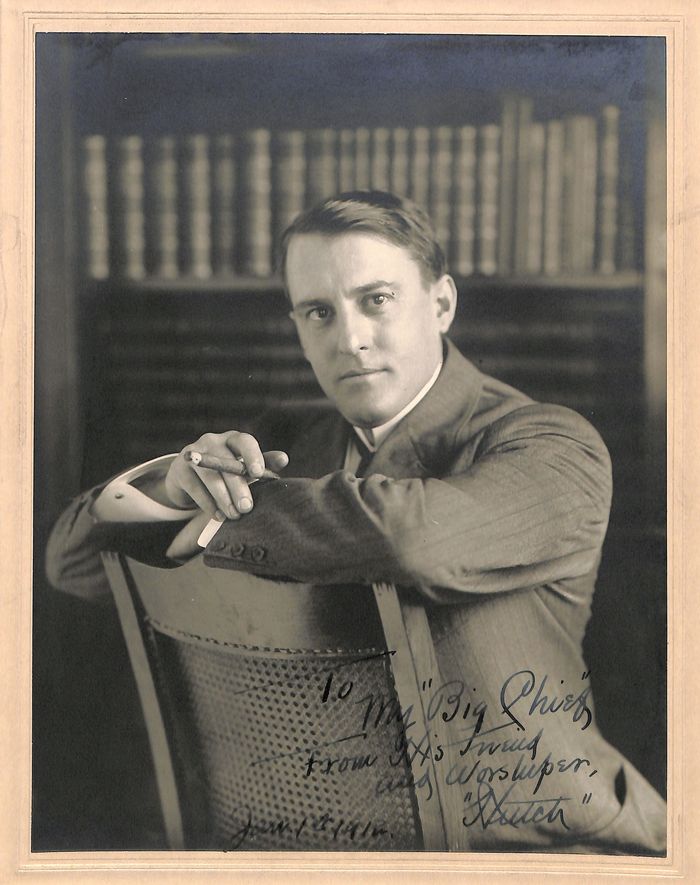
- Sources 12 and 13: A state encyclopedia and a US National Park Service archive record, used for the archival photograph and its caption.
Related Reading
- Rapamycin's First Longevity Trial Missed Its Primary Endpoint, another trial judged on the one result it was built to test
- Galleri Found More Cancers, but Not Fewer Late Ones, a trial that missed its main goal and is sold on a secondary result
- Juggling Grew Their Brains at 60. It Reversed in Months., what does and does not change the ageing brain
- A Bone Drug Cut Fractures by a Third. Vitamin D Did Not., including a screening trial that missed its main goal and hit a secondary one
- 1 of 8 NMN and Urolithin A Trials Improved How Bodies Work, what happened when supplement trials were judged on their own goals
In 703 older adults in Shanghai with hearing loss and mild cognitive impairment, hearing aids improved hearing. About 3 in 100 with them reached a dementia-level score in two years, against about 5 in 100 without. The trial was too small to settle it.
Written with the help of AI tools, shaped and verified by humans. Every result in this article was checked against the trial's own paper, its protocol, its registry record or the other papers cited. Sources read as an abstract or manuscript only are marked.
This article is for information only and is not medical advice. Do not start or stop any treatment on the basis of an article.