Statins block the pathway that makes CoQ10. That part is true. Almost everything people build on top of it is not.
On 16 July 2026, the FDA approved a cholesterol pill called LIPFENDRA. It lowers LDL as hard as an injection does, and it does it without touching the pathway that makes CoQ10. That approval is a good moment to ask a question a lot of people have been answering wrong for twenty years.
If you take a statin, someone has told you to take CoQ10 with it. Maybe a pharmacist, maybe a cardiologist, maybe a bottle at the front of the store. The reasoning is elegant, and it is the reason this supplement sells: statins work by blocking an enzyme that your body also uses to make CoQ10. Block the enzyme, lose the CoQ10, get sore muscles. Put the CoQ10 back, fix the problem.
Every step of that story is worth checking. The first step is solid. The rest of it falls apart in an interesting way.
Why This Matters
CoQ10 is not a fringe supplement. It is one of the most widely taken compounds among adults over 50, and the single most common reason people give for taking it is a statin. It is also expensive relative to what it does, and the advice to take it comes from people with real credentials.
So this is not a story about an obvious scam. It is a story about a genuinely beautiful hypothesis that keeps failing its own best tests, and about what happens when a mechanism is so satisfying that nobody checks whether the effect exists. It is the same trap we have walked through with NAD supplements and with the supplement landscape more broadly: a mechanism is the beginning of an argument, not the end of one.
The Part That Is True
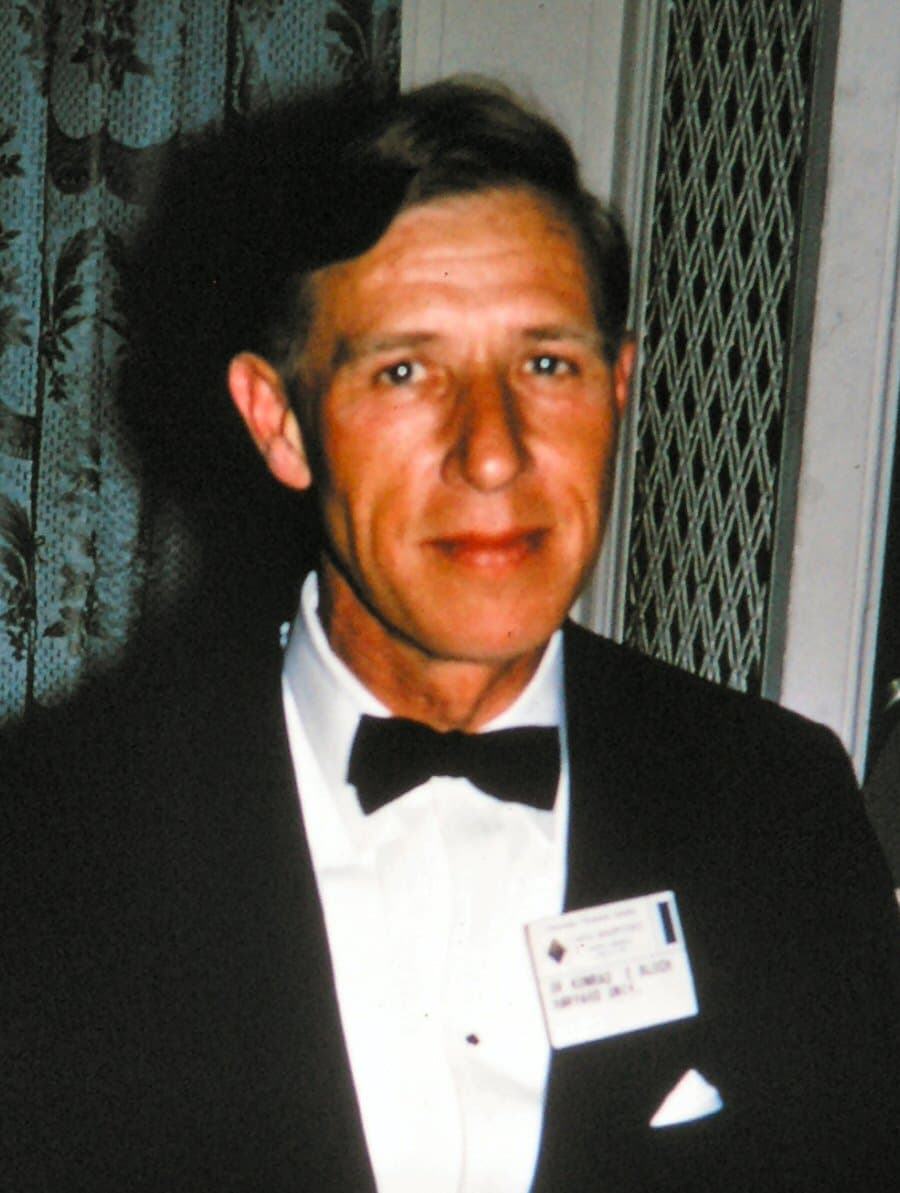
Konrad Bloch spent the 1950s working out how a cell builds cholesterol from scratch. The route he mapped starts with acetyl-CoA and runs through a molecule called mevalonate, then on to farnesyl pyrophosphate. At that point the road forks. One branch continues to cholesterol. The other builds the long isoprenoid tail of ubiquinone, which is CoQ10.
Statins work by blocking HMG-CoA reductase, the enzyme that makes mevalonate. It is the top of the road, before the fork. So a statin does not just reduce cholesterol. It reduces everything downstream of that junction, and CoQ10 is downstream of that junction.
CoQ10 matters because of where it works. It ferries electrons through the respiratory chain inside your mitochondria, which is the machinery that turns food into usable energy. Muscle is dense with mitochondria. So if a drug drained CoQ10 from muscle, sore muscles is exactly the symptom you would predict.
This is not disputed, and it is not theoretical. A meta-analysis of eight placebo-controlled treatment arms found statins lower plasma CoQ10 by 0.44 micromoles per litre (95% CI −0.52 to −0.37, p less than 0.001). It held for every statin tested: atorvastatin, simvastatin, rosuvastatin, pravastatin. The biochemistry does what the biochemistry says.
So far the supplement industry is telling you the truth.
The Part Where It Breaks
Here is the first crack. Plasma CoQ10 does not travel through your blood on its own. It is fat-soluble, so it rides on lipoproteins, and most of it rides on LDL.
Think about what that means for the measurement. You take a drug that dramatically lowers LDL. Then you measure a molecule that travels on LDL, and you find less of it. Some of that drop is the passenger. Some of it is just the vehicle disappearing.
The numbers hint at exactly this. In an early double-blind study of 30 patients, statins lowered total cholesterol by about 40 percent, and plasma CoQ10 by about 40 percent. The two moved together, in lockstep, which is what you would expect if you were watching a carrier effect rather than a synthesis effect.
But plasma was never the interesting question anyway. If CoQ10 depletion causes muscle pain, it has to be depleted in muscle. So people biopsied muscle.
They did not find what the story needs.
In 1995, researchers gave hypercholesterolemic patients simvastatin for four weeks and biopsied their muscle. Serum ubiquinone fell, as expected. Muscle tissue ubiquinone did not fall. It went up. The paper's title says it flatly: decreases in serum ubiquinone concentrations do not result in reduced levels in muscle tissue.
In 2005, a randomized controlled trial put this on firmer ground. Forty-eight patients, eight weeks, three arms: simvastatin 80mg, atorvastatin 40mg, or placebo, with muscle biopsies. Muscle ubiquinone fell significantly in exactly one arm, simvastatin 80mg, from 39.7 to 26.4 nanomoles per gram. Atorvastatin 40mg did nothing to muscle CoQ10. Placebo did nothing. Simvastatin 80mg is a dose so high it is now rarely prescribed, partly because of muscle risk.
Then comes the study that should have ended the debate. Researchers took 18 patients who actually had statin-related myopathy, the real thing, and measured their muscle CoQ10 against controls. If low muscle CoQ10 causes statin myopathy, these are the people who must have it.
Their muscle CoQ10 was not statistically different from controls. Muscle structure was normal in 14 of the 18. There was no sign of the mitochondrial damage the theory predicts.
Read that again, because it is the whole ballgame. The people with the disease do not have the deficiency that is supposed to cause the disease.
What Happened When Someone Ran the Trial Properly
You could still argue the mechanism is subtle and the supplement helps anyway. Fine. That is a testable claim, and it has been tested more than a dozen times, mostly badly.
The trials are small, 32 to 76 people. They last 30 to 90 days. They are single-centre. And most of them share one fatal design flaw: they enrolled people who said statins hurt their muscles, without checking.
One trial checked. In 2015, a team took 120 patients with self-reported statin myalgia and did something the others skipped. Before testing anything, they ran a blinded crossover of simvastatin against placebo to find out who actually got pain from the drug and not from the placebo.
Only 41 of 120 passed. About a third. Two-thirds of "statin myalgia" was not statin myalgia.
Those 41 confirmed cases then got simvastatin plus 600mg a day of ubiquinol, the expensive form, the highest dose anyone uses, or simvastatin plus placebo.
The supplement worked perfectly, biochemically. Serum CoQ10 went from 1.3 to 5.2 micrograms per millilitre, a fourfold rise. There is no question the CoQ10 got in.
Pain got worse with simvastatin in both groups, and CoQ10 made no difference at all (p=0.53 for pain severity, p=0.56 for interference). No change in muscle strength. No change in VO2 max. The authors' conclusion is one sentence: CoQ10 supplementation does not reduce muscle pain in patients with statin myalgia.
The meta-analyses mostly agree. One pooled five studies and found nothing (SMD −0.53, 95% CI −1.33 to 0.28, p=0.20). Another pooled seven and found nothing (WMD −0.42, 95% CI −1.47 to 0.62), and also found CoQ10 did not help a single person stay on their statin (RR 0.99, 95% CI 0.81 to 1.20).
One meta-analysis is positive, and it is the one you will find quoted on supplement sites. It reports a large reduction in muscle pain (WMD −1.60, 95% CI −1.75 to −1.44). Two things about it are worth knowing. Its heterogeneity is I² = 89.6%, meaning its trials disagree with each other enormously, which should widen a confidence interval rather than produce one that narrow. And in the same paper, across ten trials and 462 participants, CoQ10 had no effect on creatine kinase, the objective blood marker of muscle damage (WMD 0.09, 95% CI −0.06 to 0.24, p=0.23).
That last detail keeps showing up and it is the tell. Subjective pain scores sometimes move. The objective marker does not. Not in the positive meta-analysis, not in the negative ones, not in the well-designed trial. If CoQ10 were repairing statin-injured muscle, CK would budge. It does not.
This is a pattern worth learning to spot, because it recurs across supplement research. When the subjective endpoint moves and the objective one sits still, the most economical explanation is usually that you are measuring expectation rather than biology. We saw the same split in the evidence for NMN and NR.
The Thing CoQ10 Is Being Asked to Fix Mostly Is Not There
Now the harder truth, and the one that reframes everything above.
Three independent lines of evidence, using three different designs, converge on the same uncomfortable finding: most statin muscle symptoms are not caused by the statin.
SAMSON gave 60 people who had already quit statins over side effects a year of monthly bottles: some statin, some placebo, some empty. They scored symptoms daily on their phones, blinded. Symptom intensity was 8.0 with no tablet, 15.4 on placebo, and 16.3 on the statin. Statin versus placebo: p=0.388. Do the arithmetic on the gap and about 90 percent of the symptom burden was present on placebo. Half of them went back on statins afterward.
StatinWISE ran 200 patients through a series of blinded n-of-1 trials in UK primary care. Difference in muscle symptoms between statin and placebo: −0.11 on a 0 to 10 scale (95% CI −0.36 to 0.14, p=0.40). The point estimate is negative.
ASCOT-LLA is the cleanest natural experiment in the field, because the same trial ran blinded and then unblinded. During the blinded phase, with 10,180 patients, muscle-related side effects were identical between statin and placebo (HR 1.03, 95% CI 0.88 to 1.21, p=0.72). When the trial went open-label and everyone knew what they were taking, the excess appeared (HR 1.41, 95% CI 1.10 to 1.79, p=0.006). Same drug. Same patients. The only thing that changed was knowing.
And the largest analysis of all, pooling 19 double-blind trials and 123,940 patients, found statins do cause a small real excess of muscle symptoms, confined to the first year: RR 1.07, about 11 extra events per 1,000 person-years. After the first year, nothing (RR 0.99, 95% CI 0.96 to 1.02). Their summary is that roughly one in 15 muscle complaints on a statin is actually caused by the statin.
None of this means the pain is imaginary. Nocebo pain is real pain. People genuinely hurt, and they are not making it up. Expectation shapes physical sensation through well-mapped pathways, which is a theme we have covered in stress, mindset, and longevity. But if the symptom is mostly not coming from the drug's chemistry, then a supplement aimed at the drug's chemistry has nothing to grab hold of.
Which is exactly what the trials found.
Red Yeast Rice Is a Statin
This is where the story gets genuinely strange, because there is a large group of people avoiding statins by taking a statin.
Red yeast rice is rice fermented with Monascus purpureus. It has been used in China for centuries and is sold everywhere as the natural way to lower cholesterol. Its active compound is monacolin K.
In 1979, Akira Endo isolated monacolin K from a Monascus culture. That same year, a compound called mevinolin was isolated from a different mould at Merck. They turned out to be the same molecule. It was eventually renamed lovastatin, and the FDA approved it as a prescription drug in 1987.
The European Food Safety Authority states it without hedging: monacolin K in lactone form is identical to lovastatin, the active ingredient of several medicinal products.
So red yeast rice is not an alternative to statins. It is a statin, sold without a prescription, without a dose on the label, and with all the same mechanics. It inhibits the same enzyme. It sits at the same fork in Bloch's pathway. In mice, it depletes tissue CoQ10 exactly as you would predict, in the liver and heart, within 30 minutes, dose-dependently. Note that this is rodent data, and as with most supplement claims, nobody has run the equivalent measurement in humans.
The people buying red yeast rice to avoid the drug that depletes their CoQ10 are buying the drug that depletes their CoQ10.
Now the part that should actually worry you. Because it is regulated as a food rather than a drug, nobody controls the dose.
In 2017, researchers bought 28 red yeast rice brands from ordinary US retailers: GNC, Walgreens, Walmart, Whole Foods. Two contained no detectable monacolin K at all. Across the rest, following each manufacturer's own recommended daily serving, the dose ranged from 0.09mg to 10.94mg per day. That is a 120-fold spread. Not one of the 28 products stated the monacolin K content on the label.
An earlier US analysis of 12 products found monacolin K from 0.10 to 10.09mg per capsule, and found citrinin, a mycotoxin that damages kidneys, in a third of them. A European survey of 37 products found actual monacolin K ranging from 1.2 to 36mg per daily dose, with 24 products exceeding their own label claims by up to 266 percent.
Sit with what that means in practice. Two bottles on the same shelf, same category, same promise. One is a sugar pill. The other is a real dose of a real statin. Neither label tells you which one you have. And you are taking it precisely because you did not want the pharmacologically controlled version.
Europe responded in 2022 by capping products at less than 3mg of total monacolins per daily portion, with mandatory warnings. But note what EFSA actually said when it looked at the safety data: it found severe adverse reactions, including rhabdomyolysis and hepatitis, reported at intakes as low as 3mg a day, and concluded it could not identify any intake of monacolins from red yeast rice that does not raise health concerns. The 3mg cap is not a level EFSA blessed as safe. It is roughly where the reported harm starts.
The US position is stranger. The FDA holds that red yeast rice products containing substantial monacolin K are unapproved new drugs and cannot legally be sold as supplements. Which produces a quiet absurdity: a red yeast rice product is legal in America roughly to the extent that it does not work.
To be fair to it, red yeast rice does lower LDL, by something like 15 to 25 percent. That is real, and it is consistent across meta-analyses, for the obvious reason. And a large meta-analysis of 53 trials in 8,535 people found no increase in muscle problems (OR 0.94, 95% CI 0.53 to 1.65). That confidence interval is wide enough to hide a 65 percent increase in risk, so it is an underpowered null rather than a clean bill of health. Short trials in healthy volunteers are also the worst possible place to catch a rare event like rhabdomyolysis.
One more thing about fermented products, and it is not a statin problem at all. In 2024, a Japanese manufacturer's red yeast rice supplements were linked to hundreds of reports of serious kidney injury and a recall. The cause turned out to be puberulic acid, produced by a blue mould that had gotten into the production facility. It was not monacolin K. It was not citrinin. It was a third contaminant nobody was looking for. Japanese authorities never established causality for most of the deaths that were reported, and the reported figures include people who died of unrelated causes, so the death toll you may have seen quoted is not a confirmed one. But the lesson survives the uncertainty: what grows in the vat is not always what you meant to grow.
What Changed This Week
Which brings us back to LIPFENDRA.
On 16 July 2026, the FDA approved enlicitide, a 20mg once-daily tablet from Merck. It is the first oral PCSK9 inhibitor. Until now this drug class existed only as an injection every two to four weeks.
PCSK9 inhibitors do something completely different from statins. They do not slow cholesterol production. Your liver cells pull LDL out of your blood using LDL receptors, and normally those receptors recycle back to the cell surface to work again. PCSK9 is a protein that grabs the receptor and drags it to the lysosome to be destroyed. Block PCSK9, and the receptors survive and keep clearing LDL.
Notice where that happens. Nowhere near Bloch's pathway. No HMG-CoA reductase, no mevalonate, no fork. So the entire mechanistic rationale for CoQ10 does not apply to this drug class. There is nothing to deplete.
This is worth sitting with, because it is the cleanest test the CoQ10 hypothesis will ever get. If muscle pain on cholesterol drugs comes from CoQ10 depletion, then a drug that lowers cholesterol just as hard without touching CoQ10 should spare people's muscles.
The evidence that PCSK9 inhibition does not cause muscle problems is decent, and the best piece of it is a trial called GAUSS-3. It enrolled 491 patients who believed they could not tolerate statins, and, like the good CoQ10 trial, it checked first: only 42.6 percent had symptoms on atorvastatin that they did not also have on placebo. Those confirmed patients then got evolocumab, an injectable PCSK9 inhibitor, or ezetimibe. Muscle symptoms occurred in 20.7 percent on evolocumab versus 28.8 percent on ezetimibe. Discontinuation for muscle symptoms: 1 patient out of 145 on evolocumab, versus 5 of 73 on ezetimibe.
That is a real answer to the question CoQ10 has been failing to answer for two decades. If you genuinely cannot tolerate statins, the fix is not to add a supplement to the statin. It is a drug that does not use that pathway.
Enlicitide lowered LDL by 56 percent against placebo at 24 weeks in a 2,912-patient trial, and 59 percent in a 303-patient trial in people with inherited high cholesterol. The common side effects were diarrhoea (7 percent versus 2 percent) and dizziness (9 percent versus 4 percent).
Now the caveats, and they matter.
It is approved on cholesterol, not on outcomes. Merck says so directly in its own announcement: it is not yet known if LIPFENDRA can reduce the risk of cardiovascular morbidity and mortality. The trial that will answer that, CORALreef Outcomes, has over 14,500 people enrolled and has not reported. Its primary completion date is November 2029. LDL is a surrogate. A good one, with decades of support, but a surrogate.
The injectable versions of this class did eventually prove themselves on hard outcomes. Evolocumab in 27,564 patients cut cardiovascular events (HR 0.85, 95% CI 0.79 to 0.92). Alirocumab in 18,924 patients hit exactly the same number (HR 0.85, 95% CI 0.78 to 0.93). That is the bar enlicitide has to clear, and it has not been tested against it yet.
And then there is the price. Enlicitide's list price is about $315 a month. Generic atorvastatin costs roughly $4 a month. That is close to 80 times the price, for a drug with no proven outcome benefit yet, competing against one of the best-evidenced drugs in medicine. For someone with familial hypercholesterolemia or blinded-confirmed statin intolerance, that math can work. For someone who read that statins deplete CoQ10 and got worried, it does not. And none of it displaces the unglamorous things that move cardiovascular risk, like aerobic fitness and what you eat.
Where CoQ10 Might Actually Deserve a Look
None of this makes CoQ10 useless. It makes it useless for the thing most people buy it for. There is one place the evidence is genuinely unresolved, and honesty requires saying so.
In heart failure, a trial called Q-SYMBIO gave 420 patients 300mg of CoQ10 a day or placebo for two years. The result was striking: major cardiovascular events in 15 percent versus 26 percent (HR 0.50, 95% CI 0.32 to 0.80, p=0.003), with lower cardiovascular and all-cause mortality as secondary endpoints. A Cochrane review pooling 11 trials found a mortality benefit (RR 0.58, 95% CI 0.35 to 0.95) at moderate certainty.
Before you act on that, four things.
The trial's own short-term primary endpoint was null. At 16 weeks, no significant change in symptoms, walk distance, or NT-proBNP. The positive result is the two-year composite.
It was stopped early. It enrolled 420 of a planned 550 because recruitment was slow, and the decision was made by the steering committee, not an independent safety board. Trials stopped early before reaching their target tend to overstate effects.
The Cochrane result is not independent confirmation. Q-SYMBIO was the sole contributor to that mortality analysis. It is not eleven trials agreeing. It is one trial, cited twice.
And the funding. Q-SYMBIO received support from Pharma Nord, Kaneka, and the International Coenzyme Q10 Association. Two CoQ10 manufacturers and a CoQ10 trade body. The trial's study monitor was an employee of Pharma Nord. The paper states that all authors reported no relationships relevant to its contents.
The other trial people cite, KiSel-10, gave elderly Swedes CoQ10 plus selenium and found lower cardiovascular mortality. But the cohort was selenium-deficient at baseline, the benefit concentrated in those with the lowest selenium, and the authors themselves concede the effects of selenium and CoQ10 cannot be separated in their data. It may largely be a selenium trial.
So: if you have heart failure, CoQ10 is a conversation worth having with your cardiologist. The signal is real enough to discuss and too fragile to bank on. It is not a reason for a healthy person on a statin to buy anything.
As for the broader longevity claim, it is thinner than the marketing suggests. No trial has ever tested CoQ10 for lifespan or biological aging in humans. Not one. The premise that tissue CoQ10 declines with age traces largely to a single cross-sectional study from 1989, which found the direction of decline but does not support the specific percentage you will see quoted around it.
That premise deserves a harder look than it usually gets. "It declines with age, so replace it" is one of the most reliably wrong arguments in this field. It is the same reasoning that drove the taurine story, where the 2025 human data turned out to show taurine does not decline with age at all. Decline is not destiny, and correcting a decline is not the same as extending healthspan.
CoQ10's own effect on LDL, across an umbrella review of 17 meta-analyses, is about 3 mg/dL. Statins do 30 to 50 percent. CoQ10 is not a lipid drug in either direction.
That umbrella review also rated only 2 of its 17 meta-analyses as high quality. Nine of 17 were rated very low.
So What Should You Take From This
If your muscles hurt on a statin, the CoQ10 aisle is the wrong aisle. The best trial in confirmed patients, at the highest dose and the most bioavailable form, did nothing. Talk to your doctor instead, because there are things that actually work: a different statin, a lower dose, alternate-day dosing, or a genuine blinded rechallenge to find out whether the statin is the culprit. Two-thirds of the time, it is not. And if you are among the third for whom it is, the PCSK9 class exists now, and as of this week one of them is a pill.
If you take red yeast rice to avoid statins, you are taking a statin. An unlabelled one, at a dose that can vary 120-fold between bottles, possibly with a kidney-toxic mould byproduct in it. If you want a statin, get the one where somebody measured the dose. If you do not want a statin, this is not the way to not want one.
If you have heart failure, ask your cardiologist about CoQ10. The evidence is weak and conflicted, but it is not nothing, and the risk is low. Just know that the trial underneath it was funded and monitored by the people who sell the product.
If you are taking CoQ10 for longevity, know what you are buying. There is no human lifespan data. There is no biological aging data. Ubiquinol, the premium form, did not significantly beat ordinary ubiquinone in the best independent head-to-head. The famous 1,200mg safety ceiling was published by the supplement industry's own trade association. If your goal is mitochondrial health, the interventions with actual human evidence behind them are exercise and sleep, not a capsule.
CoQ10 is not a fraud. It is something more interesting and more common: a mechanism so satisfying that it survived twenty years of evidence saying the effect it predicts does not happen. Statins really do block the pathway. Your muscle really does not run out. Your pain really is mostly not the drug. And the supplement really does not help.
The mechanism was beautiful. It was just never the answer.
This article is for information, not medical advice. Do not start, stop, or change a statin or any other prescription based on what you read here. If you are having muscle symptoms, that is a conversation with your doctor, and it is a conversation worth having, because the alternatives are real and they are better than they were a month ago.
Frequently Asked Questions
Should I take CoQ10 with my statin?
Based on the evidence, there is no good reason to. The best-designed trial gave 600mg of ubiquinol to patients with blinded-confirmed statin muscle pain, quadrupled their serum CoQ10, and changed nothing: not pain, not strength, not VO2 max, not creatine kinase. Across meta-analyses, CoQ10 did not even help people stay on their statins (RR 0.99). It is not harmful, and if you are already taking it and feel better, the risk of continuing is low. But it is not doing what the label implies.
Do statins actually deplete CoQ10?
In your blood, yes, by about 0.44 micromoles per litre. In your muscle, which is where it would have to matter, mostly no. Muscle CoQ10 fell only at simvastatin 80mg in a controlled trial, not at atorvastatin 40mg. And in patients who genuinely have statin myopathy, muscle CoQ10 is not significantly different from people without it. Part of the plasma drop is also an artefact of measurement, because CoQ10 travels on LDL, so lowering LDL lowers the CoQ10 you can measure.
Is red yeast rice a safer natural alternative to statins?
It is not an alternative. Monacolin K, its active ingredient, is chemically identical to lovastatin in its lactone form. It is a statin. The difference is that nobody regulates the dose: across 28 US products, following each label's own instructions delivered anywhere from 0.09mg to 10.94mg a day, and none of them printed the amount. Some products have contained citrinin, a mycotoxin that damages kidneys. EFSA could not identify any dose of monacolins from red yeast rice that it considers free of health concerns.
What is enlicitide and should I ask my doctor about it?
Enlicitide (LIPFENDRA) is a once-daily pill approved by the FDA on 16 July 2026. It is the first oral PCSK9 inhibitor, a class that previously required injections. It lowers LDL about 56 percent versus placebo and works by a completely different mechanism from statins, so it does not affect CoQ10 at all. Two caveats: it is approved on cholesterol lowering, not on proven reduction of heart attacks or deaths, and that trial does not report until late 2029. And it lists at roughly $315 a month against about $4 for generic atorvastatin. It is worth asking about if you have familial hypercholesterolemia or genuine, confirmed statin intolerance. It is not a replacement for a statin that is working fine.
If most statin muscle pain is nocebo, does that mean it is in my head?
No, and this deserves a careful answer. Nocebo pain is real pain. It hurts the same, it is measured the same, and the people in these trials were not exaggerating. What the evidence says is about causation, not about whether you are suffering. Roughly 90 percent of the symptom burden shows up on placebo too, and the largest analysis puts about one in 15 muscle complaints down to the drug itself. That is genuinely useful news, because it means most people who think they cannot take a statin actually can. In SAMSON, half of the participants who had already quit statins went back on them after seeing their own blinded data.
Is CoQ10 worth taking for anything?
Possibly for heart failure, where a 420-person trial found fewer cardiovascular events over two years. That evidence is fragile: the trial's short-term endpoint was null, it was stopped early before reaching its enrolment target, the Cochrane review that appears to support it is actually just quoting that same trial, and it was part-funded by two CoQ10 manufacturers and monitored by an employee of one of them. Worth a conversation with a cardiologist. Not worth self-prescribing. For longevity specifically, there is no human trial of CoQ10 on lifespan or biological aging at all.
Sources
- Marcoff L, Thompson PD. (2007). "The role of coenzyme Q10 in statin-associated myopathy: a systematic review." Journal of the American College of Cardiology. PMID 17560286
- Banach M, Serban C, Ursoniu S, et al. (2015). "Statin therapy and plasma coenzyme Q10 concentrations: a systematic review and meta-analysis of placebo-controlled trials." Pharmacological Research. PMID 26192349
- Ghirlanda G, Oradei A, Manto A, et al. (1993). "Evidence of plasma CoQ10-lowering effect by HMG-CoA reductase inhibitors: a double-blind, placebo-controlled study." Journal of Clinical Pharmacology. PMID 8463436
- Laaksonen R, Ojala JP, Tikkanen MJ, Himberg JJ. (1995). "Decreases in serum ubiquinone concentrations do not result in reduced levels in muscle tissue during short-term simvastatin treatment in humans." Clinical Pharmacology and Therapeutics. PMID 7828383
- Paiva H, Thelen KM, Van Coster R, et al. (2005). "High-dose statins and skeletal muscle metabolism in humans: a randomized, controlled trial." Clinical Pharmacology and Therapeutics. PMID 16003294
- Lamperti C, Naini AB, Lucchini V, et al. (2005). "Muscle coenzyme Q10 level in statin-related myopathy." Archives of Neurology. PMID 16286544
- Taylor BA, Lorson L, White CM, Thompson PD. (2015). "A randomized trial of coenzyme Q10 in patients with confirmed statin myopathy." Atherosclerosis. PMID 25545331
- Banach M, Serban C, Sahebkar A, et al. (2015). "Effects of coenzyme Q10 on statin-induced myopathy: a meta-analysis of randomized controlled trials." Mayo Clinic Proceedings. PMID 25440725
- Kennedy C, Koller Y, Surkova E. (2020). "Effect of coenzyme Q10 on statin-associated myalgia and adherence to statin therapy: a systematic review and meta-analysis." Atherosclerosis. PMID 32179207
- Qu H, Guo M, Chai H, et al. (2018). "Effects of coenzyme Q10 on statin-induced myopathy: an updated meta-analysis of randomized controlled trials." Journal of the American Heart Association. PMID 30371340
- Howard JP, Wood FA, Finegold JA, et al. (2021). "Side effect patterns in a crossover trial of statin, placebo, and no treatment (SAMSON)." Journal of the American College of Cardiology. PMID 34531021
- Wood FA, Howard JP, Finegold JA, et al. (2020). "N-of-1 trial of a statin, placebo, or no treatment to assess side effects." New England Journal of Medicine. PMID 33196154
- Herrett E, Williamson E, Brack K, et al. (2021). "Statin treatment and muscle symptoms: series of randomised, placebo controlled n-of-1 trials (StatinWISE)." BMJ. PMID 33627334
- Gupta A, Thompson D, Whitehouse A, et al. (2017). "Adverse events associated with unblinded, but not with blinded, statin therapy in the Anglo-Scandinavian Cardiac Outcomes Trial-Lipid-Lowering Arm (ASCOT-LLA): a randomised double-blind placebo-controlled trial and its non-randomised non-blind extension phase." The Lancet. PMID 28476288
- Cholesterol Treatment Trialists' Collaboration. (2022). "Effect of statin therapy on muscle symptoms: an individual participant data meta-analysis of large-scale, randomised, double-blind trials." The Lancet. PMID 36049498
- EFSA Panel on Food Additives and Nutrient Sources added to Food. (2018). "Scientific opinion on the safety of monacolins in red yeast rice." EFSA Journal. DOI 10.2903/j.efsa.2018.5368
- Cohen PA, Avula B, Khan IA. (2017). "Variability in strength of red yeast rice supplements purchased from mainstream retailers." European Journal of Preventive Cardiology. PMID 28641460
- Gordon RY, Cooperman T, Obermeyer W, Becker DJ. (2010). "Marked variability of monacolin levels in commercial red yeast rice products." Archives of Internal Medicine. PMID 20975018
- Righetti L, Dall'Asta C, Bruni R. (2021). "Risk assessment of RYR food supplements: perception vs. reality." Frontiers in Nutrition. PMID 34950692
- Yang HT, Lin SH, Huang SY, Chou HJ. (2005). "Acute administration of red yeast rice (Monascus purpureus) depletes tissue coenzyme Q10 levels in ICR mice." British Journal of Nutrition. PMID 15705235
- Fogacci F, Banach M, Mikhailidis DP, et al. (2019). "Safety of red yeast rice supplementation: a systematic review and meta-analysis of randomized controlled trials." Pharmacological Research. PMID 30844537
- Endo A. (1979). "Monacolin K, a new hypocholesterolemic agent produced by a Monascus species." The Journal of Antibiotics. Article
- National Center for Complementary and Integrative Health. "Red Yeast Rice: What You Need To Know." NCCIH
- Merck. (2026). "Merck's LIPFENDRA (enlicitide) is the First and Only Once-Daily Oral PCSK9 Inhibitor Approved by the U.S. FDA to Reduce LDL-C in Adults with Hypercholesterolemia." Merck
- Merck & Co. "CORALreef Outcomes: A Study of MK-0616 in Reducing Major Adverse Cardiovascular Events." NCT06008756
- Merck & Co. "CORALreef Lipids: A Study of MK-0616 in Adults With Hypercholesterolemia." NCT05952856
- Nissen SE, Stroes E, Dent-Acosta RE, et al. (2016). "Efficacy and tolerability of evolocumab vs ezetimibe in patients with muscle-related statin intolerance: the GAUSS-3 randomized clinical trial." JAMA. PMID 27039291
- Sabatine MS, Giugliano RP, Keech AC, et al. (2017). "Evolocumab and clinical outcomes in patients with cardiovascular disease (FOURIER)." New England Journal of Medicine. PMID 28304224
- Schwartz GG, Steg PG, Szarek M, et al. (2018). "Alirocumab and cardiovascular outcomes after acute coronary syndrome (ODYSSEY OUTCOMES)." New England Journal of Medicine. PMID 30403574
- Lagace TA. (2014). "PCSK9 and LDLR degradation: regulatory mechanisms in circulation and in cells." Current Opinion in Lipidology. PMID 25110901
- Mortensen SA, Rosenfeldt F, Kumar A, et al. (2014). "The effect of coenzyme Q10 on morbidity and mortality in chronic heart failure: results from Q-SYMBIO." JACC: Heart Failure. PMID 25282031
- Al Saadi T, Assaf Y, Farwati M, et al. (2021). "Coenzyme Q10 for heart failure." Cochrane Database of Systematic Reviews. PMID 35608922
- Alehagen U, Johansson P, Bjornstedt M, Rosen A, Dahlstrom U. (2013). "Cardiovascular mortality and N-terminal-proBNP reduced after combined selenium and coenzyme Q10 supplementation: a 5-year prospective randomized double-blind placebo-controlled trial among elderly Swedish citizens." International Journal of Cardiology. PMID 22626835
- Kalen A, Appelkvist EL, Dallner G. (1989). "Age-related changes in the lipid compositions of rat and human tissues." Lipids. PMID 2779364
- Pravst I, Rodriguez Aguilera JC, Cortes Rodriguez AB, et al. (2020). "Comparative bioavailability of different coenzyme Q10 formulations in healthy elderly individuals." Nutrients. PMID 32188111
- Hathcock JN, Shao A. (2006). "Risk assessment for coenzyme Q10 (ubiquinone)." Regulatory Toxicology and Pharmacology. PMID 16814438
- Hosoe K, Kitano M, Kishida H, et al. (2007). "Study on safety and bioavailability of ubiquinol after single and 4-week multiple oral administration to healthy volunteers." Regulatory Toxicology and Pharmacology. PMID 16919858
- Martinez-Vizcaino V, Cavero-Redondo I, Reina-Gutierrez S, et al. (2024). "Effects of coenzyme Q10 supplementation on cardiometabolic outcomes: an umbrella review." Journal of Cardiovascular Development and Disease. PMID 39728267
Funding Transparency
LSD is editorially independent. We receive no funding from pharmaceutical, supplement, or longevity companies. The funding relationships behind the research cited above are unusually important in this case, because the three pillars of the popular CoQ10 argument each carry a commercial fingerprint.
- Source #31 (Q-SYMBIO): Received partial support from Pharma Nord ApS (Denmark) and Kaneka Corp (Japan), both CoQ10 manufacturers, and from the International Coenzyme Q10 Association, a CoQ10 trade body. The trial's study monitor was an employee of Pharma Nord. The paper states that all authors reported no relationships relevant to its contents. This is the single trial underneath nearly every "CoQ10 for heart failure" claim.
- Source #32 (Cochrane review): Independent, but Q-SYMBIO was the sole contributor to its mortality analysis. The review's moderate-certainty mortality finding is not independent corroboration of Q-SYMBIO. It is Q-SYMBIO.
- Source #33 (KiSel-10): Part of the analysis costs were supported by grants from Pharma Nord ApS, the same manufacturer that supplied and part-funded Q-SYMBIO.
- Source #36 (1,200mg/day safety ceiling): Both authors were affiliated with the Council for Responsible Nutrition, the dietary supplement industry's trade association. The most-quoted safety figure for CoQ10 was produced by the supplement industry's own trade body.
- Source #37 (ubiquinol safety and pharmacokinetics): All six authors were employees of Kaneka Corporation, the patent holder and dominant commercial supplier of ubiquinol. This is the foundational citation for ubiquinol safety and it is a manufacturer document.
- Source #24, #25, #26 (enlicitide and the CORALreef trials): Merck is the manufacturer of enlicitide (LIPFENDRA) and the sponsor of all CORALreef trials. The approval announcement is a company press release.
- Source #27 (GAUSS-3): Sponsored by Amgen, manufacturer of evolocumab (Repatha). Source #28 (FOURIER): Funded by Amgen. Source #29 (ODYSSEY OUTCOMES): Funded by Sanofi and Regeneron, manufacturers of alirocumab (Praluent).
- Sources with no commercial CoQ10 funding, for contrast: #7 (Taylor 2015), #10 (Qu 2018, funded by the National Natural Science Foundation of China), #35 (Pravst 2020, Slovenian public research grant), and #38 (the umbrella review, funded by Spanish public universities and a Ministry of Science grant). These are the studies that found, respectively: CoQ10 does not fix confirmed statin myalgia, CoQ10 does not move creatine kinase, ubiquinol is not significantly better than ubiquinone, and CoQ10 lowers LDL by about 3 mg/dL with most of the underlying meta-analyses rated low or very low quality.
Related Reading
- Mitochondria Slow With Age, and Exercise Is the Proven Fix - CoQ10's day job is carrying electrons through the respiratory chain. This is what that machinery actually does and what genuinely supports it.
- The Supplement Landscape - How to read supplement evidence in general, including why a good mechanism is the weakest kind of argument.
- Your Body's Biomarkers - What LDL, CK, and the other numbers in this article mean, and which ones are worth tracking.
- Metabolic Syndrome Hits More Than Half of Adults Over 60 - The wider context for cholesterol, and why LDL is only one part of cardiovascular risk.
Written with the help of AI tools, shaped and verified by humans who care about getting this right.