Over 12 weeks in Granada, liver fat fell with monthly diet classes alone. An 8-hour eating window, exercise or both did not detectably add to it.
A trial in Granada, Spain, split 187 adults with obesity into four groups for 12 weeks (1). Everyone got a monthly 90-minute class on the Mediterranean diet and physical activity (1). One group got only the classes. The other three added an 8-hour daily eating window, supervised exercise twice a week, or both (1).
The trial, called TEMPUS, was built to answer one question about liver fat. Would any of the three add-ons lower it more than the classes alone? None of the three lowered it detectably more (1).
Liver fat was measured on an MRI scan, as the share of the liver that is fat. At the start it averaged about 10 percent (1).
Against classes alone, liver fat fell a further 0.4 percentage points on average with the eating window (1). It fell 0.8 more with exercise, and 1.1 more with both (1). Each gap could be chance (1).
The planners had expected a 5-point fall with the two together (1, 2). By our reading, the trial rules out a gap that large.
Some secondary results moved. The eating-window groups lost about 2 kg more weight, and the exercise groups got fitter (1). The paper treats every such result as exploratory (1). The trial was sized to test liver fat (1, 2).
A year after the program ended, liver fat still did not detectably differ between the groups (1).
Fatty liver, and who was in the trial
Fat builds up in the liver of many people who carry extra weight. In 2023 its medical name changed from non-alcoholic fatty liver disease to MASLD (8). The new name needs fat in the liver plus at least 1 of 5 heart and metabolic risk factors, and no other cause (8). Our article on a senolytic trial in liver scarring covers what can follow when it progresses.
TEMPUS used a simpler line. Anyone whose scan showed 5 percent fat or more counted as having fatty liver (1). By that line, 139 people, about three in four, had it at the start (1). Having it was not a condition for joining (1).
Participants were aged 25 to 65, with a body mass index from 30 to under 40 (1). They usually ate across 11 hours a day or more (1). Their average age was about 48, and half were women (1).
People with diabetes, liver disease from alcohol or viruses, or night shifts were excluded (1). They joined between May 2023 and April 2024 (1).
What each group did
The eating-window groups picked their own 8 hours and were asked to keep them every day for 12 weeks (1). They were advised to finish eating by 21:00 (1). Outside the window they could drink only water, or coffee and tea without sugar or sweeteners (1). In practice, the median window ran from 11:00 to 18:50 in one group and 12:30 to 20:40 in the other (1).
The exercise groups trained twice a week for 55 to 85 minutes, under a trainer, in groups of up to six (1). Each session paired a circuit of band and bodyweight exercises with hard intervals of uphill treadmill walking (1). They also aimed to walk 10 percent more steps each week (1).
The people who read the scans and ran the statistics did not know who was in which group (1). The staff running the programs did (1).
Submitted to the register 3 days after recruiting began
TEMPUS began recruiting on 2 May 2023 (1, 3). It was first submitted to ClinicalTrials.gov, as NCT05897073, on 5 May 2023, and posted on 9 June 2023 (3). The record, as read on 23 November 2026, names change in liver fat on MRI from the start to 12 weeks as its primary outcome (3). The protocol, published in January 2024, says the same (2). The paper reports that outcome as its main result (1).
The register and the paper differ on several details, among them these three. The register's entry rule is a body mass index of 28 or more, against 30 in the protocol and paper (1, 2, 3). It advises finishing eating by 20:00, against 21:00, and sets a walking goal of 15 percent more steps each week, against 10 (1, 2, 3). We read the record as it stood on 23 November 2026. Its edit history was not available to us, so we cannot see whether the primary outcome was ever edited.
Liver fat fell in every group
The main result compares each add-on group with the classes-alone group. Each result comes with a range: the span of values compatible with the data. Zero means no difference.
With the eating window, liver fat fell 0.4 percentage points more on average, with a range from 2.0 more to 1.2 less (1). With exercise it fell 0.8 more, range 2.4 more to 0.8 less (1). With both it fell 1.1 more, range 2.7 more to 0.5 less (1). Every range crosses zero.
The P values were 0.93, 0.54 and 0.28 (1). A P value is the chance of seeing a gap at least this large if there were genuinely no difference. These were adjusted for making several comparisons at once (1). The three add-on groups did not detectably differ from each other either (1).
Liver fat did fall within every group. Over 12 weeks it dropped 1.2 points with classes alone and 1.5 with the eating window (1). It dropped 2.0 with exercise and 2.3 with both (1). So the classes group improved too, which narrowed the gaps.
With no group that went without classes, the trial cannot say what caused that fall, by our reading. It could be the classes, the attention of being studied, or time. The authors list the lack of a true no-intervention group as a limitation (1).
At 12 weeks, 175 of the 187 people had a scan (1). The analysis kept all 187 and used every scan available, assuming the missing results were missing at random (1).
Why the gaps came out smaller than planned
The plan expected liver fat to fall 5.0 points with both together and 2.5 with each add-on alone (1, 2). It expected no fall with classes alone (1, 2). That came from an earlier trial of alternate-day fasting and exercise, the only such trial available when TEMPUS was designed (1). On those numbers, 19 people per group would have been enough (1). The team recruited about 46 per group, to allow for dropouts and to study men and women apart (1).
The authors give several reasons the gaps were smaller. The classes group improved more than they expected (1). Most people started with normal or only mildly raised liver fat, leaving little room to fall (1). And 12 weeks may be too short (1).
By our reading, the combined group's range stops at 2.7 points, well short of the planned 5 (1, 2). The single add-ons' ranges stop at 2.0 and 2.4, below the planned 2.5 (1, 2). By our reading, that rules out the planned gaps for them too, the exercise gap only just.
Weight, fitness and the smaller results
The paper calls every secondary and subgroup result exploratory and hypothesis-generating, and does not adjust their P values for the number of comparisons (1). By our count, each of its two main results tables compares about 30 measures three ways, close to 100 comparisons each (1). By our arithmetic, about 1 in 20 of those can cross the usual line of P less than 0.05 by chance alone.
Men and women
In men, the combined group's liver fat fell 2.2 points more than with classes alone (1). The range ran from 4.2 to 0.1 points more, with a P value of 0.04 (1). In women the same gap was 0.2 points, range 1.4 more to 1.0 less (1).
The paper describes this split two ways. Its introduction says the split was planned in advance (1). Its methods call it an extra check chosen after the main analysis, and exploratory (1).
The protocol had planned every analysis separately for men and women (2). The main text gives no test of whether men and women truly responded differently.
Women started with less to lose. Their average liver fat was about 8 percent, against 10.5 to 13 percent in men (1). About half to two thirds of women had fatty liver at the start, against more than 8 in 10 men (1). The authors say this may partly explain the gap (1).
Fatty liver that fell below the line
Among people who started with fatty liver, some ended under the 5 percent line. That happened for 6.5 percent with classes alone and 19.4 percent with the eating window (1). It happened for 13.5 percent with exercise and 28.6 percent with both (1). By our arithmetic, that is 2 of 31, 7 of 36, 5 of 37 and 10 of 35 people.
Only the combined group differed from classes alone, P value 0.03, with no adjustment for multiple comparisons (1). The authors call it exploratory and say the remission results need caution, because the trial did not enrol only people with fatty liver (1). A person who starts at 5.5 percent needs only a small fall to cross the line; that point is ours.
Weight and body make-up
Both eating-window groups lost 2.2 kg more than classes alone (1). Within groups, the eating-window groups each lost 3.8 kg, against 1.6 kg with classes alone (1). That is about 4 percent of body weight in 12 weeks (1).
Our article on caloric restriction and fasting covers why it is hard to separate when people eat from how much.
Food intake, from three recall interviews per person, showed no detectable difference between groups (1).
Some of the weight lost was not fat. The eating-window group lost 0.9 kg more fat-free mass, which includes muscle, than classes alone (1). Fat-free mass was estimated with a bioimpedance scale, which passes a small current through the body (1).
The authors write that adding exercise to the eating window eased this loss (1). Even so, the combined group lost 0.6 kg more fat-free mass than exercise alone, P value 0.03 (1). Our article on GLP-1 drugs covers the same question for weight-loss medicines.
Fitness rose with exercise
Time on a treadmill test rose 2.6 minutes more with exercise and 2.5 more with both, against classes alone (1). Estimated peak oxygen use, a standard fitness measure, rose by 5.2 and 5.7 millilitres per kilo per minute more (1). That figure was worked out from treadmill time with standard equations, not measured from breath (1). The eating window alone did not detectably change fitness (1). Our article on VO2 max explains why that number tracks long-term health.
Blood tests: one liver enzyme fell
ALT is a liver enzyme that rises when liver cells are stressed. It fell 10 units per litre more in the combined group than with classes alone, range 19 to 1 (1). The group averages at the start were 29 to 36 units (1).
The cholesterol results point in different directions. LDL cholesterol fell 9 mg/dL more with exercise alone than with classes alone (1). In the combined group it did not detectably differ from classes alone, and its change was 16 mg/dL higher than with exercise alone (1).
Fasting glucose fell 4 mg/dL more with the eating window (1). With close to 100 unadjusted comparisons per table, by our count, we treat single results like these as fragile.
Blood pressure, triglycerides and HDL cholesterol showed no detectable differences between groups (1).
Safety and sticking with it
No serious adverse events were reported in any group (1). Self-reported complaints such as tiredness, hunger and headache were common in every group (1). By the paper's counts, the eating-window group reported each of them less often than the classes group, headache for 31 of 46 people against 45 of 48 (1). The paper gives no test. Participants in the eating-window groups kept to 9 hours or less on 94 percent of days (1). The exercise groups attended 93 and 92 percent of sessions (1).
A year later, liver fat still did not detectably differ
After 12 weeks the program stopped, and the team had no structured contact with participants for a year (1). At 12 months, liver fat did not detectably differ between any pair of groups, all P values 0.11 or higher (1). Within groups, liver fat stood 1.8 points below the start with classes alone and 0.4 points below with both add-ons (1).
The combined group's weight loss had shrunk from 3.8 kg to 0.7 kg (1). The authors suggest a partial rebound in men's liver fat, possibly driven by weight regain (1). At 12 months, 148 of the 187 had a liver scan (1).

Earlier trials, and what they compared against
The trial TEMPUS used to plan its numbers looked very different. It enrolled 80 adults with obesity and fatty liver, 81 percent of them women (4). Alternate-day fasting plus aerobic exercise five times a week cut their liver fat by 5.48 points over 3 months (4). A group with no intervention changed by 0.17 points (4).
Fasting alone cut it by 2.25 points, and the combination did not detectably beat fasting alone (4). That trial's fast days were capped at 600 calories, and its comparison group got nothing (4).
TREATY-FLD, in 88 adults with obesity and fatty liver in Guangzhou, gave everyone the same calorie target for 12 months (5). Half also ate only between 8:00 and 16:00 (5). Liver fat fell 6.9 points with the eating window and 7.9 points without it, with no detectable difference (5). The authors wrote that the window "did not produce additional benefits" for body fat or metabolic risk factors over cutting calories alone (5). They said the results support cutting calories when using an eating window (5).
TREAT, in 116 US adults, tested a noon-to-8pm window with no calorie target for 12 weeks (6). Weight fell 0.94 kg with the window and 0.68 kg with three set meals a day, again with no detectable difference (6). We read that trial as an abstract only.
The TEMPUS team ran a 2025 trial of 197 adults with overweight or obesity, with education on the Mediterranean diet as the comparison (7). Early, late and self-chosen 8-hour windows did not detectably lower deep belly fat more than the classes alone (7). The authors wrote that an eating window "offers no additional benefit over a Mediterranean diet alone" for that fat (7).
By our reading, the pattern is consistent. When the comparison group also gets good diet advice or the same calories, an eating window has not detectably added to the loss of fat stored inside the body in these trials. It added some weight loss in TEMPUS.
What would change the verdict
A longer trial in people who start with more liver fat would. The authors call for exactly that (1). Our article on metabolic health covers the risk factors that tend to travel with fatty liver.
More results are coming from this one. The paper's supplement lists outcomes planned for separate papers, among them deep belly fat, pancreatic fat, a three-month blood sugar average (HbA1c) and insulin (1). If those moved in the combined group, the exploratory results here would look stronger. If they did not, weaker.
A trial that tests directly whether men and women respond differently would settle the men's result one way or the other.
Each result, and how sure it is
Each row reads add-on group against classes alone, at 12 weeks, from TEMPUS unless noted.
| What | Result | How sure |
|---|---|---|
| Liver fat (the primary endpoint) | Eating window 0.4, exercise 0.8, both 1.1 points lower; every range crosses zero (1) | No detectable difference; by our reading, rules out the planned 2.5-point gaps for each add-on and the planned 5-point gap for both together |
| Liver fat within each group | Fell 1.2 to 2.3 points, classes alone included (1) | Measured; no untreated group |
| Liver fat in men, both together | 2.2 points lower, P value 0.04 (1) | Exploratory; no test of a men-women difference |
| Fatty liver below 5 percent | 28.6 against 6.5 percent, both together (1) | Exploratory; 10 of 35 against 2 of 31 people |
| Weight | 2.2 kg more lost with the eating window, alone or with exercise (1) | Secondary |
| Fat-free mass | 0.9 kg more lost with the eating window alone (1) | Secondary; bioimpedance estimate |
| Treadmill time | 2.6 and 2.5 minutes more with exercise (1) | Secondary |
| Liver fat at 12 months | No detectable difference between any groups (1) | Secondary; 39 of 187 had no scan |
| TREATY-FLD, 88 adults, 12 months | 6.9 against 7.9 points, same calories (5) | No detectable difference |
What you can do now
Take these numbers to your own doctor before you change anything. If a scan or blood test has shown fat in your liver, ask what it means for you.
The European liver, diabetes and obesity societies advise weight loss, diet changes and exercise for adults with fatty liver (9). TEMPUS gave diet and activity advice to every group, and liver fat fell in every group (1).
If an eating window suits you, TEMPUS found no serious adverse events over 12 weeks, and people lost about 2 kg more (1). It did not lower liver fat detectably more than diet classes did (1). Part of the weight lost was fat-free mass, and the authors suggest exercise may limit that (1).
If you want to get fitter, supervised exercise twice a week did that within 12 weeks (1). Our article on Zone 2 exercise covers how fitness relates to lifespan.
The trial left out people with diabetes, pregnancy, eating disorders and other conditions (1, 2, 3). If you take medicine for blood sugar, or have a medical condition, ask your doctor before changing when you eat.
If someone tells you an eating window clears liver fat, ask three questions:
- Which trial is that from, and was liver fat its main result?
- What did the comparison group get: nothing, advice, or the same calories?
- Was the result for everyone, or for one part of the trial, such as men?
Frequently Asked Questions
Does time-restricted eating reduce liver fat?
Not detectably more than diet advice did, in this trial. In 187 adults with obesity, an 8-hour eating window lowered liver fat 0.4 percentage points more than monthly diet classes over 12 weeks. That gap could be chance. Liver fat fell in both groups.
What did the TEMPUS trial find?
None of its three add-ons, an 8-hour eating window, supervised exercise or both, lowered liver fat detectably more than diet classes alone at 12 weeks. The eating-window groups lost more weight, and the exercise groups got fitter.
Did combining the eating window with exercise help?
Liver fat fell 1.1 points more than with classes alone, with a range that crossed zero. More people in the combined group dropped below the fatty liver line, 28.6 against 6.5 percent, and men's liver fat fell more. The paper calls both results exploratory.
Did the benefits last?
At 12 months, liver fat did not detectably differ between groups. The combined group's weight loss had shrunk from 3.8 kg to 0.7 kg. Nobody was coached during that year.
Is an 8-hour eating window safe?
No serious adverse events were reported in this 12-week trial. Tiredness, hunger and headache were common in every group, and by the paper's counts less common with the eating window than with classes alone. People kept to 9 hours or less on 94 percent of days. The trial excluded people with diabetes and some other conditions, so ask your doctor first.
Who paid for the TEMPUS trial?
Spanish and European public research grants, plus support for individual authors from Spanish, Swedish and US bodies. The paper says the funders had no role in the trial, and the authors declare no competing interests.
Sources
- Clavero-Jimeno A, et al. Effects of time-restricted eating and supervised exercise on intrahepatic fat and cardiometabolic health in adults with obesity: the TEMPUS randomized controlled trial. Nature Communications. 2026. PMID: 43015316. DOI: 10.1038/s41467-026-78625-3. Full text and first supplement read.
- Camacho-Cardenosa A, et al. Time-restricted eating and supervised exercise for improving hepatic steatosis and cardiometabolic health in adults with obesity: protocol for the TEMPUS randomised controlled trial. BMJ Open. 2024. PMID: 38267239. Read in full.
- ClinicalTrials.gov. NCT05897073, Time-Restricted Eating, Exercise and Cardiometabolic Health in Obesity (TEMPUS). Registry record. Record last updated 20 November 2025; read on 23 November 2026.
- Ezpeleta M, et al. Effect of alternate day fasting combined with aerobic exercise on non-alcoholic fatty liver disease: a randomized controlled trial. Cell Metabolism. 2023. PMID: 36549296. DOI: 10.1016/j.cmet.2022.12.001. Author manuscript read in full.
- Wei X, et al. Effects of Time-Restricted Eating on Nonalcoholic Fatty Liver Disease: The TREATY-FLD Randomized Clinical Trial. JAMA Network Open. 2023. PMID: 36930148. DOI: 10.1001/jamanetworkopen.2023.3513. Read in full.
- Lowe DA, et al. Effects of Time-Restricted Eating on Weight Loss and Other Metabolic Parameters in Women and Men With Overweight and Obesity: The TREAT Randomized Clinical Trial. JAMA Internal Medicine. 2020. PMID: 32986097. Abstract and disclosures read.
- Dote-Montero M, et al. Effects of early, late and self-selected time-restricted eating on visceral adipose tissue and cardiometabolic health in participants with overweight or obesity: a randomized controlled trial. Nature Medicine. 2025. PMID: 39775037. Abstract read.
- Rinella ME, et al. A multisociety Delphi consensus statement on new fatty liver disease nomenclature. Hepatology. 2023. PMID: 37363821. DOI: 10.1097/HEP.0000000000000520. Read in full (PMC10653297).
- European Association for the Study of the Liver, et al. EASL-EASD-EASO Clinical Practice Guidelines on the management of metabolic dysfunction-associated steatotic liver disease (MASLD). Journal of Hepatology. 2024. PMID: 38851997. Abstract read.
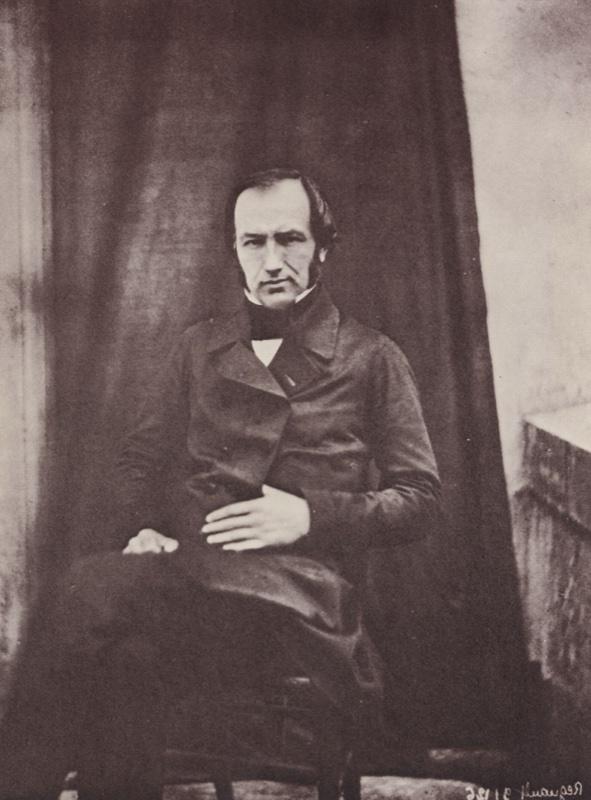
- Jensen J, Puissant C. Claude Bernard's route to the isolation of glycogen: the journey that changed scientific views on the physiological role of the liver and animal metabolism. European Journal of Applied Physiology. 2026. PMID: 41417056. DOI: 10.1007/s00421-025-06080-x. Read in full.
- Wikimedia Commons. Regnault, Victor: Porträt von Claude Bernard (Zeno Fotografie). File page. Read on 23 November 2026.
Funding Transparency
LSD is editorially independent. We receive no funding from pharmaceutical, supplement, or longevity companies. These are the funding ties behind each source above, taken from each paper's own funding and conflict statements where we could read them.
- Source 1 (TEMPUS, 2026): Funded by the Spanish Ministry of Science, Innovation and Universities and the European Regional Development Fund. Individual authors had fellowships or grants from Spanish ministries, the Junta de Andalucía and EU programs. Others came from Swedish heart, cardiology and regional bodies, and from the EXERNET research network. One author is funded by the US National Institute on Aging's own research program. The paper says the funding source had no role in the study. The authors declare no competing interests.
- Source 1, continued: Participants logged meals and sleep times in a study app made by NNBi2020 S.L., a Spanish company. The authors declare no competing interests, and the paper describes no other tie to the company.
- Source 2 (TEMPUS protocol, 2024): Funded by the Spanish Ministry of Science, Innovation and Universities, the European Regional Development Fund and the University of Granada. Competing interests: none declared.
- Source 3 (trial registry): A public record. It names the University of Granada as the sponsor.
- Source 4 (Ezpeleta, 2023): Funded by the US National Institute of Diabetes and Digestive and Kidney Diseases. One author received author fees from Hachette Book Group for the book The Every Other Day Diet.
- Source 5 (TREATY-FLD, 2023): Funded by Chinese national and university research grants. The funders had no role in the trial. No conflicts reported.
- Source 6 (TREAT, 2020): Funded by the University of California, San Francisco, the US National Institute of Diabetes and Digestive and Kidney Diseases, and the James Peter Read Foundation. Devices were gifted by iHealth Labs, MOCACARE and Oura. One author is a cofounder of Keyto and owns stock in Virta; other authors report fees from Keyto and from Medifast and Tanita advisory boards.
- Source 7 (Dote-Montero, 2025): The same Granada team. Its senior author, also the senior author of source 1, declared lecture fees from Novo Nordisk and Abbott for research unrelated to that study. We did not read its funders.
- Source 8 (Rinella, 2023): A consensus led by liver societies. Many of its authors report consulting fees, grants or speaker fees from drug companies, among them Novo Nordisk, Bristol Myers Squibb and Madrigal.
- Source 9 (EASL-EASD-EASO, 2024): A guideline from European medical societies. Several authors report consulting or lecture fees from drug companies, among them Novo Nordisk, Eli Lilly, Boehringer Ingelheim and Pfizer.
- Sources 10 and 11: A history of science review and the public file page for the archival photograph. The review's open access fee was paid by the Norwegian School of Sport Sciences, and its authors declare no competing interests.
Related Reading
- Rapamycin's First Longevity Trial Missed Its Primary Endpoint, another trial judged on the one result it was built to test
- Caloric Restriction Slowed Aging by 2 to 3 Percent, on eating less and eating within a window
- Liver Scarring Improved in 8 of 17 Patients on Senolytics, what happens when fatty liver progresses
- Zone 2 Exercise Builds the Fitness That Predicts Lifespan, the fitness gain TEMPUS did find
- Hearing Aid Trial of 703 People Missed Its Dementia Goal, a trial that missed its main goal and reported a hopeful secondary result
In 187 adults with obesity, an 8-hour eating window, exercise or both did not detectably lower liver fat more than monthly diet classes over 12 weeks. Weight and fitness moved. A year later, liver fat still did not detectably differ, and the combined group had regained most of its lost weight.
Written with the help of AI tools, shaped and verified by humans. Every result in this article was checked against the trial's own paper, its supplement, its protocol, its registry record or the other papers cited. Sources read as an abstract or manuscript only are marked.
This article is for information only and is not medical advice. Do not start or stop any treatment on the basis of an article.