Korean women who had it reported slightly more angina or heart attacks two decades on: 17 in 1,000, against 11 in 1,000 without it. Small, but measurable.
If you had preeclampsia, your heart risk may run higher for decades afterwards. A Korean study of 68,658 women looked back over about two decades after they gave birth (1). About 17 in every 1,000 who had preeclampsia reported angina or a heart attack, against 11 in every 1,000 who did not (1). The gap is small. It is also a reason to keep checking your blood pressure.
Small, but measurable. That is about half again as many women, and about 6 more in every 1,000. Adjusted for what the researchers could measure, the rate was 1.56 times as high, with a likely range of 1.19 to 2.04 (1). The whole range sits above 1.0, the point of no difference, so chance alone is an unlikely explanation. These are diagnoses, not deaths: every woman was alive when she joined the study.
The Korean study does not stand alone. One meta-analysis pooled hypertensive disorders of pregnancy, which include preeclampsia (2). For ischemic heart disease it combined 10 studies and more than 5 million women (2). The later risk came out about double, at low certainty (2).
The pattern repeats, smaller, for gestational diabetes (3, 4). Further down, we look at a separate question: how hospitals test women for heart injury, and what changed when the test did (6).
Pregnancy as a Stress Test for the Heart
Pregnancy asks the cardiovascular system to do more work for nine months: more blood volume, more vascular remodeling, more metabolic demand. Our first-principles explainer on how the heart, lungs and muscles share oxygen covers the machinery that pregnancy loads.
Researchers group several pregnancy complications under the name hypertensive disorders of pregnancy: high blood pressure that begins during pregnancy, with or without signs of organ stress. Preeclampsia is the best known of them. One systematic review defines it as a pregnancy-specific disorder involving hypertension and multiorgan dysfunction (9). It occurs in 2 to 5 percent of pregnancies globally (1).
Gestational diabetes is high blood sugar that first shows up in pregnancy. The question both complications raise is the same: does the pregnancy complication mark a higher cardiovascular risk later in life, and if so, by how much.
The suspected mechanism, as the authors describe it, runs through inflammation, damage to the lining of blood vessels and impaired blood-flow adaptation (1). Accelerated vascular aging after delivery may follow (1). On that account the pregnancy may not create the risk so much as reveal it early. That is a hypothesis, not a measurement. Our article on how chronic inflammation tracks with aging covers the background biology.
The Korean paper also notes that the American Heart Association already recommends counting a history of adverse pregnancy outcomes when assessing a woman's cardiovascular risk (1). The Lancet Commission's abstract opens with the sentence "Cardiovascular disease is the leading cause of death in women" (8). Pregnancy history is one part of that risk picture with a date attached to it.
The Korean Cohort: Two Decades After Preeclampsia
The anchor study is "Long-term cardiovascular outcome in women with preeclampsia in Korea: a large population-based cohort study and meta-analysis", published in Scientific Reports in 2024 (1). The lead author is Eun-Saem Choi and the senior author is Seung-Mi Lee.
The cohort is the Health Examinees Study, HEXA, which enrolled residents of 14 Korean cities and suburbs between 2004 and 2013 (1). The design is retrospective. Women recalled their pregnancy history at enrolment, when their average age was about 49, roughly 20 years after delivering. The follow-up runs from delivery, with a median of 22 years by the paper's count (1).
Outcomes were collected the same self-reported way: the enrolment interview plus an assessment-center revisit between 2012 and 2016 (1). In practice, most women were followed only into their early 50s, not into old age.
From the cohort, the researchers took 68,658 women who had given birth. Of these, 3,413 (5.23 percent) reported a history of preeclampsia. Over the follow-up, 767 women (1.12 percent) reported a diagnosis of ischemic heart disease and 404 (0.59 percent) reported a stroke (1).
By group: ischemic heart disease was reported by 57 of 3,413 women with a preeclampsia history (1.67 percent) against 710 of 65,245 without (1.09 percent). Stroke was reported by 30 of 3,413 (0.88 percent) against 374 of 65,245 (0.57 percent) (1). The crude incidence rates tell the same story in absolute units: 0.822 against 0.530 cases of ischemic heart disease per 1,000 woman-years (1).
The adjusted model accounted for age at delivery, number of births, hypertension, diabetes and high cholesterol before delivery, and family history of heart disease and stroke (1). Its hazard ratio for ischemic heart disease was 1.56, with a confidence interval of 1.19 to 2.04 (1). A confidence interval is the range of values compatible with this data. Because this one does not include 1.0, the no-difference point, a gap at least this large would be unlikely under no real effect.
For stroke the adjusted hazard ratio was 1.48, confidence interval 1.02 to 2.16, barely clear of no difference (1).
One disclosure, because the paper contains it. The abstract prints 1.66 for that same model. The results text prints 1.558 and Table 2 rounds it to 1.56, with the identical confidence interval; 1.558 is the only value that fits the interval's centre. The abstract's 1.66 matches one study's figure in the paper's own meta-analysis, Cho and colleagues, reference 28: a copy slip. We use 1.56 throughout.
The adjustment set also has limits. The fully adjusted model did not account for body mass index, smoking, income or gestational diabetes. That last gap matters, because gestational diabetes was far more common in the preeclampsia group: 7.15 percent against 0.93 percent (1). Some of the signal attributed to preeclampsia may travel with gestational diabetes instead.
The same paper adds a meta-analysis combining the cohort with previous Asian-population studies. For ischemic heart disease that pool holds only two studies (1). It is dominated by Cho and colleagues' 420,407-women insurance-claims cohort, which reported an adjusted hazard ratio of 1.66 (1.51 to 1.81) (1, 10). The pooled hazard ratios were 1.65 (1.51 to 1.82) for ischemic heart disease and 1.78 (1.52 to 2.10) for stroke (1).
The paper also notes one Taiwanese cohort, Wang and colleagues', that found no detectable association with ischemic heart disease (adjusted odds ratio 0.96, 0.60 to 1.53) (1). In the paper's own meta-analysis table, that cohort's stroke estimate ran higher, at 2.04 (1.18 to 3.51) (1). That figure covers all hypertensive disorders of pregnancy, not preeclampsia alone (1).
The weaknesses matter. The later diagnoses were self-reported by questionnaire, and the authors flag that outcome measurement as a possible information bias (1). The recalled pregnancy history carries the same problem, though the authors do not flag it themselves. The cohort is Korean, and the paper notes that preeclampsia rates and cardiovascular baselines differ by ethnicity (1). And the absolute risks, again, are low: most women with a preeclampsia history in this cohort reported no heart disease over the follow-up.
The Pooled Picture Across Millions of Women
The Korean cohort sits inside the wider evidence. A 2022 meta-analysis in Medicine (Baltimore) pooled 56 studies, covering 1,262,726 women with prior hypertensive disorders of pregnancy and 14,711,054 controls (2).
Each pooled figure carries its own denominator and its own certainty rating. For later hypertension the pooled relative risk was 3.46 (2.67 to 4.49), from 37 studies with about 1.5 million women, rated low certainty (2). For ischemic heart disease it was 2.06 (1.38 to 3.08), from 10 studies with about 5.2 million women, also low certainty (2). For heart failure, 2.53 (1.28 to 5.00) (2).
A relative risk here is the ratio of event rates between the two groups across the pooled studies. The meta-analysis pools relative risks and does not report absolute rates, so we cannot give the per-thousand companion these numbers deserve.
The timing finding is the most actionable one in the set. The excess risk of new hypertension was highest in the first five years after delivery: a relative risk of 5.34 (2.74 to 10.39) (2). That pool held 7 studies with about 322,000 women, rated very low certainty (2). The authors suggest cardiovascular screening for women with a history of hypertensive pregnancy starting from delivery, with the first five years named as the window that matters most (2).
For wider context, an earlier meta-analysis pooled 22 studies with more than 6.4 million women (9). Wu and colleagues put the adjusted risk of later heart failure after preeclampsia at 4.19 (2.09 to 8.38) (9). Coronary heart disease, stroke and cardiovascular death came out roughly doubled (9). The same Medicine paper describes the overall picture for cardiovascular disease as an approximately 2- to 4-fold increase (2). Against coronary disease specifically, the pooled evidence converges near double, with wide study-to-study variation.
The Wu paper is paywalled; we read its abstract.
The caveat: pooled observational studies differ in design, populations and adjustment sets, and heterogeneity in the Medicine meta-analysis was substantial (2). Both meta-analyses rate their own certainty low or very low, which is one reason this article's evidence level reads moderate, not strong.
Gestational Diabetes Shows the Same Pattern, Smaller
The gestational diabetes version of the signal comes from a 2022 meta-analysis in The BMJ: 15 studies, 513,324 women with gestational diabetes and more than 8 million controls (3). All 15 studies were rated at moderate or serious risk of bias, and the paper judges the certainty of its own evidence as low or very low (3).
Women with a history of gestational diabetes showed a 45 percent higher risk of later cardiovascular and cerebrovascular disease overall, a pooled risk ratio of 1.45 (1.36 to 1.53) (3).
A risk ratio compares risks, not rates. The crude pooled count behind it was 9,507 events among women with gestational diabetes (about 1.9 percent) against 78,895 among controls (about 1.0 percent) (3). That is a raw tally across studies with different follow-up lengths, not an adjusted comparison (3). For heart attack specifically the risk ratio was 1.74 (1.37 to 2.20); for heart failure, 1.62 (1.29 to 2.05) (3).
Does the risk work only through later type 2 diabetes? The BMJ paper says a smaller excess remains. In its words, the association "attenuated but remained significant": smaller, but still statistically significant (3). Eight studies reported both groups (3). In those, the pooled risk ratio was 1.45 (1.33 to 1.59) in all women with gestational diabetes (3). In women without subsequent diabetes it fell to 1.09 (1.06 to 1.13) (3).
A 2019 meta-analysis in Diabetologia points the same way with larger risk ratios. Across 9 studies covering 5,390,591 women, gestational diabetes went with about twice the risk of later cardiovascular events, a risk ratio of 1.98 (1.57 to 2.50) (4). Restricted to women who did not develop type 2 diabetes during follow-up, the association held at 1.56 (1.04 to 2.32) (4). In the first decade after pregnancy it was 2.31 (1.57 to 3.39) (4).
That paper is paywalled; we read the abstract, and the numbers here are the abstract's.
So the stress test result is not only an early warning of diabetes. A pregnancy history belongs in a heart risk conversation years later (1). It sits alongside the questions a doctor already asks about metabolic syndrome, which affects more than half of American adults over 60.
The Counterweight: Two Years After Gestational Diabetes
Every relative risk above sits on a small absolute base, and one 2024 study shows how small. The cohort drew 84,746 pregnancies from the Maine Health Data Organization's All Payer Claims Database (5). The deliveries ran from 2007 to 2019, and the study tracked outcomes for the first 24 months after delivery (5).
Women with gestational diabetes had a higher adjusted rate of one outcome only: new chronic hypertension, at a hazard ratio of 1.56 (1.32 to 1.86) (5). In absolute terms, new chronic hypertension appeared in 4.19 percent of women with gestational diabetes against 1.83 percent without it (5).
For everything else measured in that window, there was no detectable association (5). Ischemic heart disease came out at a hazard ratio of 0.75 (0.34 to 1.65), stroke at 1.13 (0.78 to 1.66) (5). Arrhythmia came out at 1.16 (0.59 to 2.29) and cardiomyopathy at 0.75 (0.40 to 1.41) (5).
Heart failure came out lower in the gestational diabetes group, at 0.45 (0.21 to 0.98) (5). We read that result, which has no clear mechanism, as a reminder of how noisy short windows are. The Maine paper's full text is free to read; its numbers here match its abstract.
The counterweight does not erase the pooled signal. It locates it in time. In one cohort, new chronic hypertension rose in the first two years (5). No excess in heart or stroke events was detectable in that window (5). The pooled studies describe the years and decades after that (3, 4).
For hypertensive disorders of pregnancy, the pooled hypertension signal is strongest in the first five years after delivery (2). For gestational diabetes, the Maine cohort already found more new chronic hypertension within 24 months (5). A reader who had gestational diabetes last year and feels fine is looking at the Maine picture. The BMJ and Diabetologia pools describe the decades after that.

When Hospitals Switched the Test and the Cutoffs
The second half of the story is about diagnosis. The blood test at the center of modern heart attack diagnosis measures troponin, a protein released by injured heart muscle. High-sensitivity troponin means a newer generation of the test that detects far smaller amounts.
For years, the threshold for "injury" was one number for everyone. In the trial's validation phase, that number was set by assay precision, not by anyone's biology (6). The threshold was the concentration the assay could measure reliably: an interassay coefficient of variation below 10 percent, 40 nanograms per litre at 7 sites and 50 at 3 (6). Women on average run lower troponin levels than men, so a single precision-based threshold sits further from women's typical range.
High-STEACS, a stepped-wedge cluster-randomized trial across 10 Scottish hospitals, enrolled 48,282 consecutive patients with suspected acute coronary syndrome, 47 percent of them women (6). Hospitals switched in random order from an older test with one shared cutoff to a high-sensitivity test with sex-specific cutoffs: 16 nanograms per litre for women, 34 for men (6).
The change tested the new test and the new cutoffs together, and the trial could not separate the two. In the paper's words, "we did not directly compare whether the use of sex-specific thresholds was superior to a uniform threshold using a hs-cTnI assay" (6). The sex-specific analysis we draw on was pre-specified, but it is a secondary analysis of the main trial (6).
Run on the same blood samples, the new test and cutoffs labelled 42 percent more women and 6 percent more men as injured: 3,521 to 4,991 women (6). In the trial's own words, "Use of sex-specific thresholds identified 5 times more additional women than men with myocardial injury" (6). That five times figure counts people newly reclassified as having myocardial injury. Of 1,270 adjudicated reclassified women, only 401 (32 percent) had a type 1 heart attack (6).
Then the treatment numbers. Even after the injuries were identified, women remained about half as likely as men to receive the treatments those findings can trigger, in the authors' own summary (6). Coronary revascularization, meaning stents or bypass surgery, went to 15 percent of women with myocardial injury against 34 percent of men (6). New prescriptions tell the same story: dual antiplatelet therapy in 26 percent against 43 percent, and statins in 16 percent against 26 percent (6).
Outcomes did not significantly improve for either sex. Among women with myocardial injury, recurrent heart attack or cardiovascular death at one year occurred in 18 percent before the switch and 17 percent after (6). The adjusted hazard ratio was 1.11, with a confidence interval of 0.92 to 1.33 (6).
Among men, the figures were 18 percent and 15 percent, an adjusted hazard ratio of 0.85 (0.71 to 1.01), also not significant (6). The parent trial, reported separately in The Lancet, found no reduction in the same outcome at one year among the 1,771 patients the new test reclassified (12). The figures there were 15 percent against 12 percent, an adjusted odds ratio of 1.10 (0.75 to 1.61) (12).
Why would better identification change so little? The authors offer a partial explanation: more women had non-ischemic myocardial injury, where the standard coronary treatments may not be indicated. They add, in the paper's words, "this is not the only explanation": treatment differences persisted in patients with confirmed type 1 heart attacks (6).
One funding disclosure belongs here. Abbott Laboratories, which makes the assay, provided the trial's troponin reagents, calibrators and controls free of charge (6). Four authors, including joint senior author Nicholas Mills, report honoraria from Abbott Diagnostics, and Mills and Apple report Abbott research grants outside this work (6). The trial's grant funding came from the British Heart Foundation, a charity (6). One author, Weir, was supported by NHS Lothian through the Edinburgh Clinical Trials Unit (6).
The same pattern, drugs tested mainly on males and women absorbing the difference, is the subject of an earlier piece of ours. High-STEACS measures a diagnostic gap in a randomized trial; the parallel is not exact, because the old cutoff came from assay precision, not male biology (6).
WARRIOR: A Separate Question
High-STEACS asks whether a better test changes outcomes. WARRIOR asks something different: for women who already have symptoms and open arteries, does stronger medicine help? The two questions are often confused, so we keep them apart.
WARRIOR enrolled women with angina and suspected ischemia but no obstructive coronary artery disease on angiography, the imaging of the heart's arteries (7). It randomized 2,476 women at 71 US sites, short of the 4,422 it had planned, and followed them for a median of 3.03 years (7). The enrolled women were on average 64 years old, with blood pressure and LDL cholesterol already well controlled and high rates of statin and blood-pressure-medication use at baseline (7).
Half were assigned intensive medical therapy, a high-intensity statin plus an ACE inhibitor or ARB and aspirin. Half received usual care (7).
Over the follow-up, 421 primary-outcome events occurred: 221 in the intensive group and 200 in usual care, a hazard ratio of 1.13 (0.94 to 1.37), no detectable difference (7). Hospitalizations for angina, chest pain severe enough to admit, were the dominant contributor to those events (7). A sensitivity analysis for contamination between the groups produced a hazard ratio of 0.74 (0.35 to 1.56), still including the no-difference point (7).
The authors are careful about the limit: recruitment fell short, so the trial lacks the power to rule out a benefit. Their conclusion says the findings support more investigation in a population with a high burden of angina hospitalization, health resource use and poor quality of life (7).
The paper's conflict statement lists industry ties for the lead and senior authors. Carl Pepine reports research grants from GE Healthcare, Merck and Sanofi, among others; Noel Bairey Merz reports personal fees from Sanofi and Abbott Diagnostics paid to her institution (7). The trial itself was funded by the US Department of Defense, the National Institutes of Health, private family foundations and a VA research network (7).
Where the Under-Diagnosis Claim Comes From
You have probably read that heart disease in women is under-diagnosed. It is worth knowing which kind of evidence sits under that sentence, because the sentence travels further than its sources.
The most quoted version comes from the Lancet women and cardiovascular disease Commission in 2021, which wrote: "Cardiovascular disease in women remains understudied, under-recognised, underdiagnosed, and undertreated" (8). That Commission is an expert report: a synthesis by specialists, not a trial. We could read only its abstract, which is paywalled, and we say so because the distinction matters. Expert reports are where the claim is loudest. Trials and cohorts are where it is testable.
The testable parts exist. High-STEACS measured one specific diagnostic change in a cluster-randomized trial (6). WARRIOR randomized treatment intensity in women with angina and open arteries, a separate question (7). The Maine, Korean, BMJ and Diabetologia data are large cohorts and pooled cohorts (1, 2, 3, 4, 5).
What we could not verify is the popular statistic that women are 50 percent more likely to receive a wrong initial diagnosis after a heart attack. Versions of it circulate widely, and we did not trace it to a primary source we could read. It is not used in this article for that reason.
The pregnancy data and the diagnosis data meet in one place. A pregnancy complication marks a group of women whose later risk runs higher, decades before most heart checks begin. Whether the diagnosis gap adds to that risk in this group is an open question: no study we could read tests it.
What You Can Do Now
None of this is a reason for alarm. The absolute risks above are low, and they are also usable information.
If you have chest pain, pressure or sudden breathlessness now, call your emergency number first. If symptoms keep coming back after a normal test, tell your doctor about your pregnancy history and ask what else could explain them.
If you had preeclampsia or gestational diabetes, make sure it is in your medical record, and that any doctor assessing your heart risk knows about it. The American Heart Association already recommends counting adverse pregnancy outcomes in cardiovascular risk assessment, as the Korean paper notes (1). The history costs nothing to disclose.
Ask for the boring checks: blood pressure, cholesterol, blood sugar. Our guide to which routine health numbers matter for longevity explains each one. For hypertensive disorders of pregnancy, the pooled hypertension signal was highest in the first five years after delivery (2). After gestational diabetes, the Maine cohort already found more new chronic hypertension within 24 months (5). Blood pressure is also the easiest risk factor on this page to measure at home.
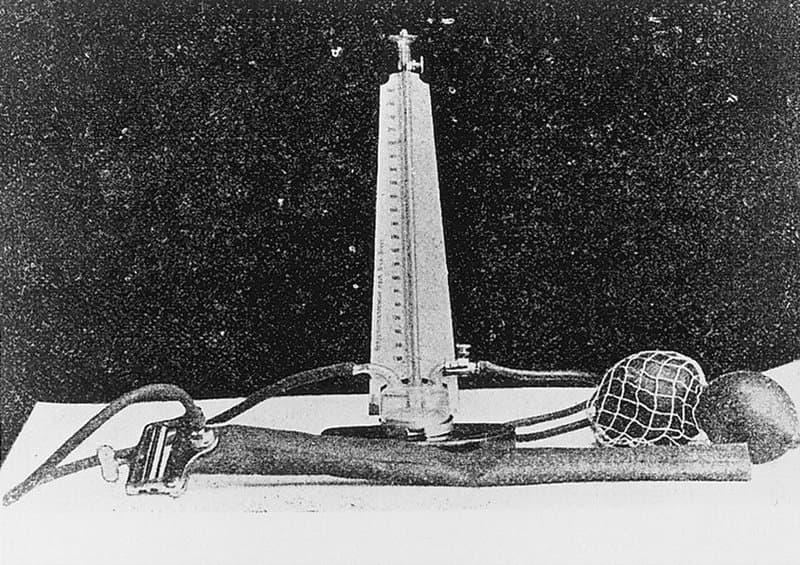
The instrument above is a Riva-Rocci sphygmomanometer of the kind Korotkoff used, pictured in his 1910 dissertation (11). A validated home cuff is its modern descendant.
If you are around 50, the Korean data still apply to you. That is roughly the age to which those women were followed, and in the authors' own reading the risk persisted for more than 20 years after delivery (1). The checks matter at 50 and after, not only in the years right after pregnancy.
Do the things that were already the answer. Zone 2 cardio training and the ordinary maintenance of metabolic health have the deepest human evidence behind them. If you are approaching menopause, which moves several of the same risk dials, our piece on what menopause measurably does to bone and cholesterol is the companion read.
Frequently Asked Questions
Does preeclampsia mean I will get heart disease?
No. In a 68,658-woman Korean cohort, 1.67 percent of women with a recalled preeclampsia history reported ischemic heart disease over about two decades, against 1.09 percent without. The adjusted hazard ratio was 1.56, but more than 98 percent of both groups reported no heart disease.
What is preeclampsia?
A pregnancy-specific disorder involving new high blood pressure and multiorgan dysfunction, in one systematic review's definition (9). Cohorts find it marks a higher rate of later hypertension, heart disease and stroke.
Does gestational diabetes go with heart risk even without later type 2 diabetes?
On the evidence we could read, a smaller excess remains. A 2019 Diabetologia meta-analysis found the association held at a risk ratio of 1.56 in women who did not develop type 2 diabetes during follow-up. The BMJ's figure without subsequent diabetes was 1.09. Both papers are pooled observational data; the Diabetologia one is paywalled and we read its abstract.
Why did one shared cutoff identify fewer injuries in women?
The older test's single cutoff was set by assay precision, not biology, and women on average run lower troponin levels. High-STEACS replaced it with a high-sensitivity test with sex-specific cutoffs, and identification rose 42 percent in women and 6 percent in men. Five times more additional women than men were reclassified with heart muscle injury.
What should I tell my doctor after a complicated pregnancy?
Two things: that you had preeclampsia or gestational diabetes, and that you would like blood pressure, cholesterol and blood sugar checked on a regular schedule. For hypertensive disorders of pregnancy, the pooled hypertension signal peaks in the first five years after delivery (2). After gestational diabetes, one claims cohort found more new chronic hypertension within two years (5).
Did better diagnosis improve outcomes?
Not significantly, in the one trial that measured it. In High-STEACS, women's one-year rate of recurrent heart attack or cardiovascular death was 18 percent before the switch and 17 percent after, and men's went from 18 to 15 percent. Neither change was statistically significant, and the parent trial found no reduction at one year among the patients the new test reclassified.
Does stronger medicine help women with chest pain and open arteries?
Not in the trial we could read. In WARRIOR, intensive medical therapy did not beat usual care over a median of about 3 years in 2,476 women with angina and open arteries. The trial ran under power, so a small benefit cannot be ruled out.
Sources
- Choi ES, et al. Long-term cardiovascular outcome in women with preeclampsia in Korea: a large population-based cohort study and meta-analysis. Scientific Reports. 2024. PMID: 38553468. DOI: 10.1038/s41598-024-57858-6. Open access.
- Sukmanee J, Liabsuetrakul T. Risk of future cardiovascular diseases in different years postpartum after hypertensive disorders of pregnancy: A systematic review and meta-analysis. Medicine (Baltimore). 2022. PMID: 35905265. DOI: 10.1097/MD.0000000000029646. Open access.
- Xie W, et al. Association of gestational diabetes mellitus with overall and type specific cardiovascular and cerebrovascular diseases: systematic review and meta-analysis. The BMJ. 2022. PMID: 36130740. DOI: 10.1136/bmj-2022-070244. Open access.
- Kramer CK, et al. Gestational diabetes and the risk of cardiovascular disease in women: a systematic review and meta-analysis. Diabetologia. 2019. PMID: 30843102. DOI: 10.1007/s00125-019-4840-2. Paywalled; abstract read.
- Ackerman-Banks CM, et al. Association between gestational diabetes and cardiovascular disease within 24 months postpartum. American Journal of Obstetrics and Gynecology MFM. 2024. PMID: 38580094. DOI: 10.1016/j.ajogmf.2024.101366. Free full text at PMC12228983 (NIH manuscript).
- Lee KK, et al. Sex-Specific Thresholds of High-Sensitivity Troponin in Patients With Suspected Acute Coronary Syndrome. Journal of the American College of Cardiology. 2019. PMID: 31623760. DOI: 10.1016/j.jacc.2019.07.082. Open access. High-STEACS, NCT01852123.
- Pepine CJ, et al. Women's IschemiA TRial to Reduce Events In Non-ObstRuctive CAD (WARRIOR): a randomised controlled trial. Open Heart. 2026. PMID: 41932694. DOI: 10.1136/openhrt-2026-004115. Open access. NCT03417388.
- Vogel B, et al. The Lancet women and cardiovascular disease Commission: reducing the global burden by 2030. The Lancet. 2021. PMID: 34010613. DOI: 10.1016/S0140-6736%2821%2900684-X. Paywalled; abstract read.
- Wu P, et al. Preeclampsia and Future Cardiovascular Health: A Systematic Review and Meta-Analysis. Circulation: Cardiovascular Quality and Outcomes. 2017. PMID: 28228456. DOI: 10.1161/circoutcomes.116.003497. Paywalled; abstract read.
- Cho GJ, et al. Prior pregnancy complications and maternal cardiovascular disease in young Korean women within 10 years after pregnancy. BMC Pregnancy and Childbirth. 2022. PMID: 35313851. DOI: 10.1186/s12884-022-04578-2. Open access; full text read.
- Shevchenko YL, Tsitlik JE. 90th Anniversary of the development by Nikolai S. Korotkoff of the auscultatory method of measuring blood pressure. Circulation. 1996. PMID: 8674166. DOI: 10.1161/01.cir.94.2.116. Cited for the archival image's print history; the 1996 journal page itself was not readable.
- Shah ASV, et al. High-sensitivity troponin in the evaluation of patients with suspected acute coronary syndrome: a stepped-wedge, cluster-randomised controlled trial. The Lancet. 2018. PMID: 30170853. DOI: 10.1016/s0140-6736(18)31923-8. Open access; abstract read. The High-STEACS parent trial.
Funding Transparency
LSD is editorially independent. We receive no funding from pharmaceutical, supplement or longevity companies. These are the funding ties behind each source above, taken from each paper's own funding and conflict statements where we could read them.
- Source 1 (Choi, 2024): Supported by a National Research Foundation of Korea grant funded by the Korean government (NRF-2021R1F1A1046707), a Seoul National University Hospital research fund (0420222020), and biospecimens from the National Biobank of Korea (NBK-2021-037). Public funding; no industry tie declared.
- Source 2 (Sukmanee and Liabsuetrakul, 2022): Funded by the Royal Golden Jubilee PhD Program (PHD/0183/2561), the Thailand Science Research and Innovation Research Career Development Grant (RSA6180009), and the Faculty of Medicine, Prince of Songkla University. Public funding; no industry tie declared.
- Source 3 (Xie, 2022): The paper's own funding statement reads: "Funding: None." The authors declared no support from any organisation for the submitted work.
- Sources 4 and 9 (Kramer, 2019; Wu, 2017): Paywalled. We read the abstracts only and could not check their funding statements.
- Source 5 (Ackerman-Banks, 2024): Funded by the Eunice Kennedy Shriver National Institute of Child Health and Human Development (R15HD101793). One author receives research contracts from AbbVie, GSK, Pfizer and Sanofi that are unrelated to this study. The remaining authors report no conflict of interest.
- Source 6 (High-STEACS, 2019): Funded by a British Heart Foundation Special Project Grant (SP/12/10/29922), a BHF-Turing Cardiovascular Data Science Award (BCDSA/100003) and a BHF Research Excellence Award (RE/18/5/34216). Dr. Weir was supported by NHS Lothian through the Edinburgh Clinical Trials Unit. Abbott Laboratories provided cardiac troponin assay reagents, calibrators and controls without charge. Four authors, Drs. Shah, Chapman, Lee and joint senior author Mills, have received honoraria from Abbott Diagnostics; Drs. Mills and Apple have received Abbott Diagnostics research grants outside the submitted work.
- Source 7 (WARRIOR, 2026): Funded by the US Department of Defense CDMRP (W81XWH-17-2-0030), the McJunkin Family Foundation, the University of Florida Clinical Research Consortium (CDRN-1501-26692), NIH grants (T32 HL69751, K23HL105787, K23HL125941), the Broad, Austin, Streisand and Pollin women's heart research programs at Cedars-Sinai, the Erika Glazer Women's Heart Health Project, the Smidt Family Foundation, and the VA Women's Health Practice-Based Research Network (VA HSR&D SDR 10-012). Lead author Pepine reports research grants from GE Healthcare, Merck and Sanofi, among others; senior author Bairey Merz reports personal fees from Sanofi and Abbott Diagnostics paid to her institution.
- Source 8 (Lancet Commission, 2021): Paywalled. We read the abstract only and could not check its funding statement.
- Source 10 (Cho, 2022): Open access; full text read. Funded by the Korea Health Industry Development Institute through the Korea Health Technology R&D Project (HI19C0502), funded by the Ministry of Health and Welfare, and by the Institute of Clinical Medicine Research of Bucheon St. Mary's Hospital (BCMC22BD05). Korean public research funding plus a hospital research grant. The paper's competing-interests statement reads "Not applicable."
- Source 11 (Shevchenko and Tsitlik, 1996): Cited only for the archival image's print history.
- Source 12 (Shah, 2018): The High-STEACS parent trial, funded by the British Heart Foundation; abstract read.
Related Reading
- Women Report Adverse Drug Effects at Twice the Rate of Men, what happens when drugs are tested mainly on males
- Menopause Moves Bone and Lipids. No Clock Study Exists., what menopause measurably changes, and the aging-clock claim that has never been tested
- Nuns and Monks Live Alike. Their Gap Is Under a Year., the cleanest test of why women outlive men
- Cardio Starts in 480 Million Tiny Air Sacs, how the heart, lungs and muscles share oxygen, from first principles
About 17 in 1,000 Korean women who had preeclampsia reported angina or a heart attack two decades on, against 11 in 1,000 without it: small, but measurable. Better diagnosis found more women's heart injuries; it has not yet been shown to change their outcomes.
Written with the help of AI tools, shaped and verified by humans. Every result in this article was checked against the study's own paper or abstract; paywalled sources are marked, and only their abstracts were read.
This article is for information only and is not medical advice. Do not start or stop any medicine on the basis of an article.